


The quality trend.
We often hear about supply chain traceability in the Agrifood industry, and there are many technological innovations related to this market that makes fighting counterfeiting and protecting consumers and the Made in Italy brand one of its strengths.
It is a good thing that new technologies, with their constant innovations and updates, support all activities aimed at increasing the quality of products and processing processes. The pursuit of quality is a trend that we see today even in families, who are increasingly attentive, aware, and informed about the food they bring to the table.
During the pandemic, the percentage of those interested in the quality and origin of food products increased by about 10%. The level of information among citizens on food issues is now the majority: 20% declare themselves to be very informed, and an additional 52% define themselves as quite informed, with a growth trend of 8 percentage points.
Interest in food is therefore deeply rooted, and the certainty of information plays a fundamental role throughout the product cycle, from harvest to table. A recent study by the Food Marketing Institute showed that 44% of consumers demand detailed information on the production methods of the food they buy, and about 43% want to know how products have been treated, whether they are organic, GMO-free, or preservative-free. However, 75% do not trust what is reported on labels.
Certainty, certification, and blockchain.
When it comes to the safety and certification of information, blockchain has now entered the mainstream of producers linked to the entire agri-food system. Today, there are countless examples of using blockchain technology to notarize information in order to track products and entire batches. At Affidaty S.p.A., we have developed Trust8 (link here), a protocol that monitors and records every phase of production, which is documented in a certified blockchain Track Record History.
We have always been aware that certifying the origin of products, ensuring complete transparency on production lines, is essential to make the purchasing experience more conscious and safe. And this should not be a final goal but a starting point.
Case study: organic blueberries
Notarizing information in blockchain is not enough to guarantee the quality of a product: blockchain is not the cure-all and must be used in the right way and in the right place. What would happen if the data were incorrect from the start, i.e., at the time of entry? What would happen if a producer saved incorrect information in the blockchain?
If blockchain traceability is reduced to pure self-certification, this technology does nothing more than indelibly imprint potentially incorrect information in a public register, adding another problem to the initial one. But then, how can we get out of this impasse? Once again, the answer lies in the deep understanding and correct implementation of all the technological tools that have laid the foundations for a new cooperation between robots and information.
The first project that follows this new philosophy of interconnection between man/machine/generation of information has already been implemented, following the production chain of organic Tuscan blueberries “Borgo San Giuliano” through our technology.
For this collaboration, we are proceeding with data notarization with the classic tracking of information through QR code scans, but at the same time, we are also creating a substructure technology that supports the use and management of autonomous equipment for the cooperation and interconnection of every type of user involved in the production process: people, sensors, machines, robots, and data processing centers.
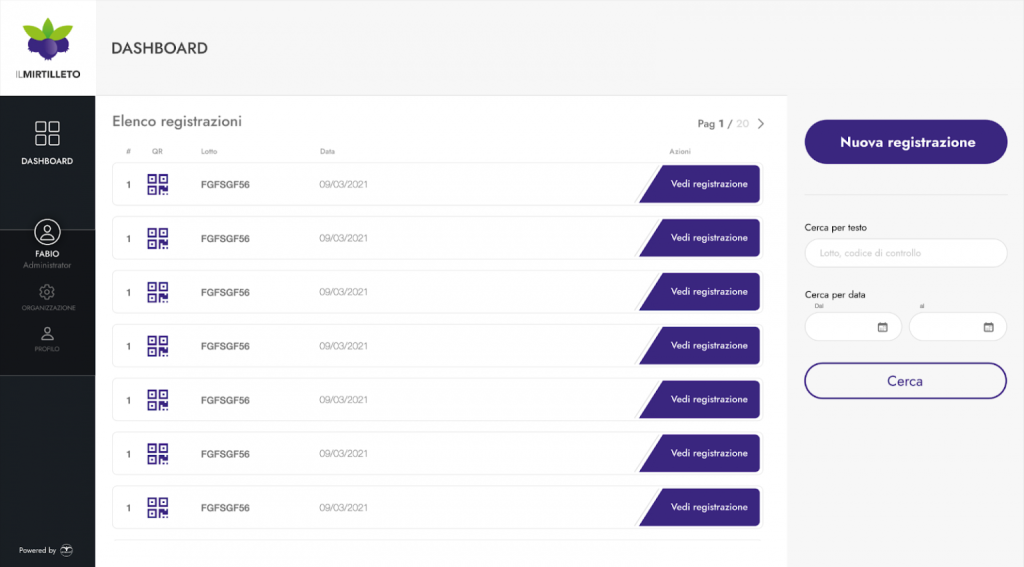
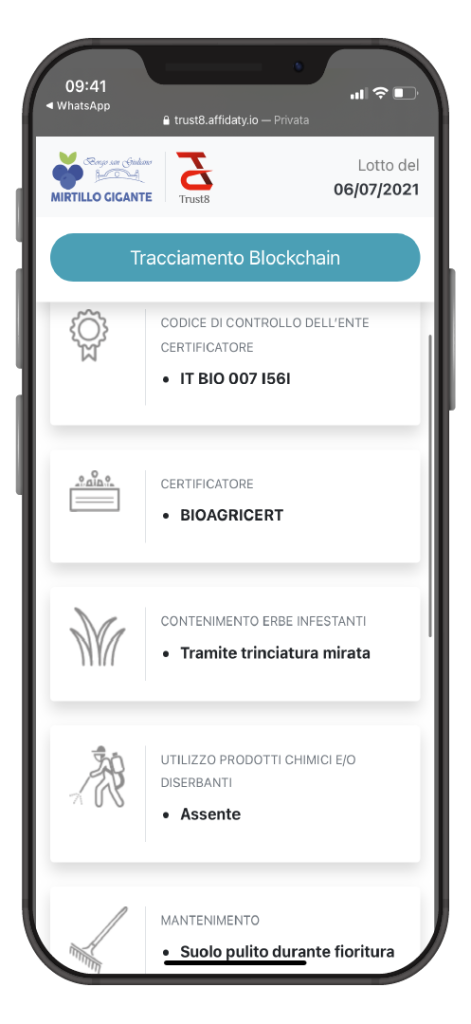
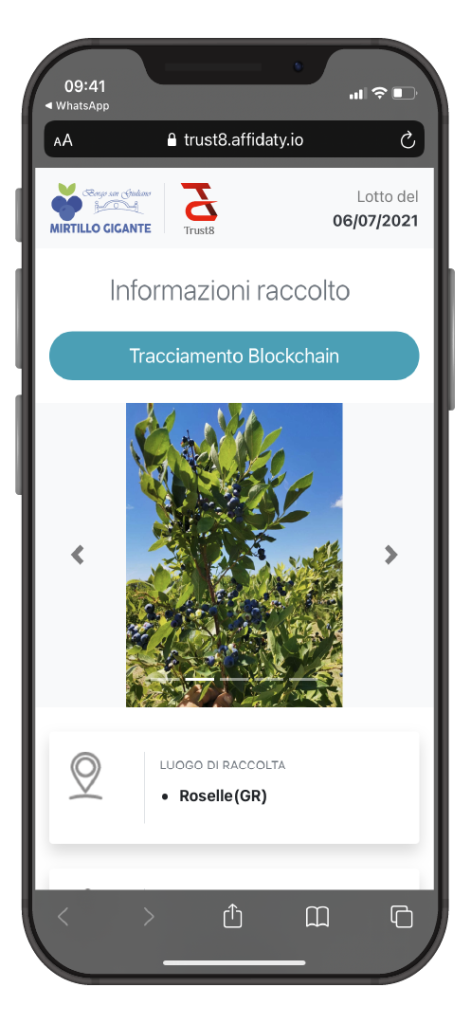
At the end of June, Phase 1 began, with the first classic writing of information related to:
- Collection location
- Control check by the certifying body (Bioagricert)
- Weed containment
- Use of chemical products or herbicides
- Soil maintenance
- Irrigation
- Type of pruning
- Fertilization
- Harvest
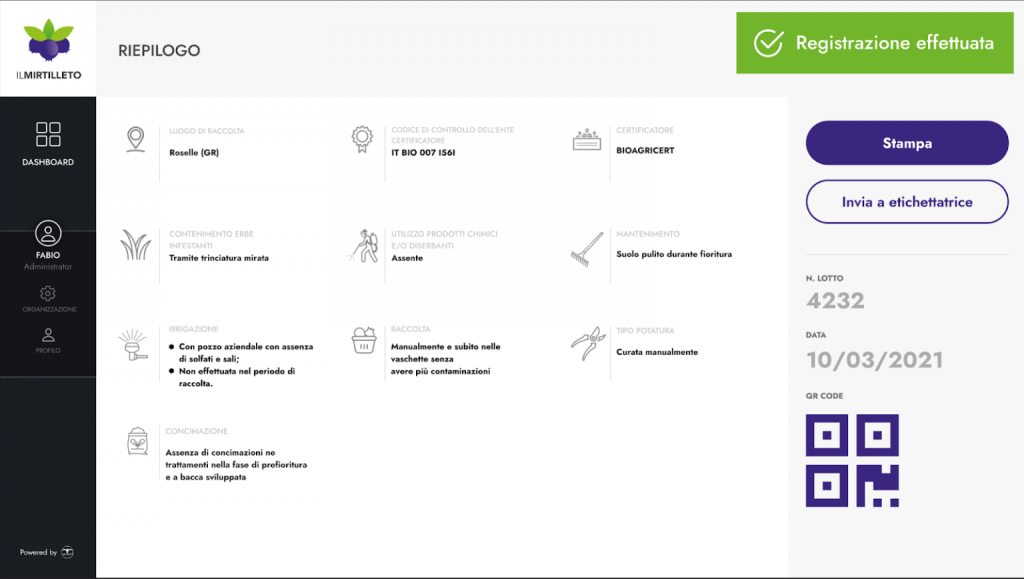
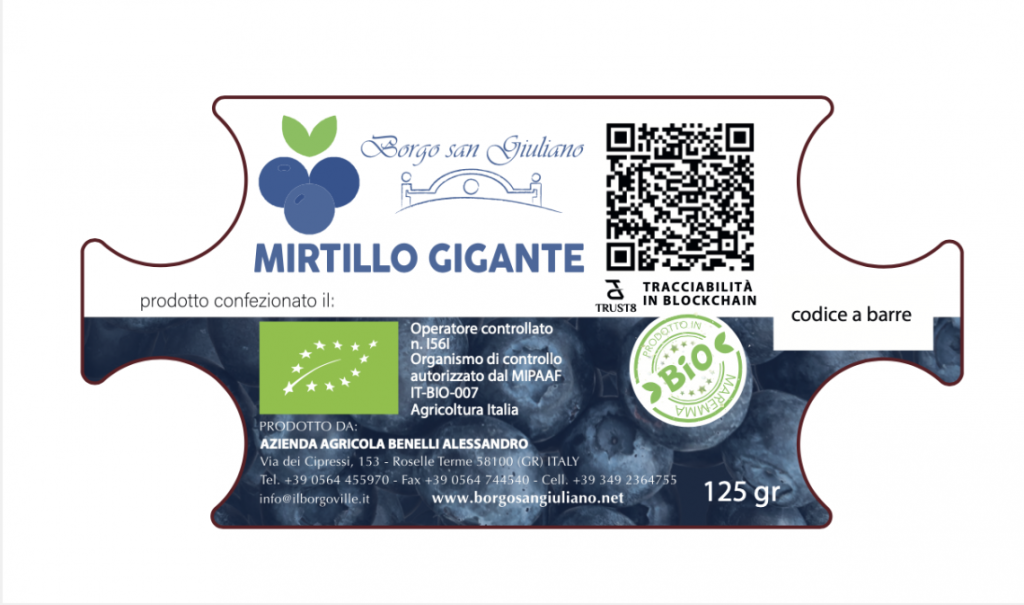
The collected data is recorded daily through a management system, which is also able to provide a photographic “day-by-day” report of the key phases of the harvest, and the process ends with the generation of a QR code that is placed on the packaging label.
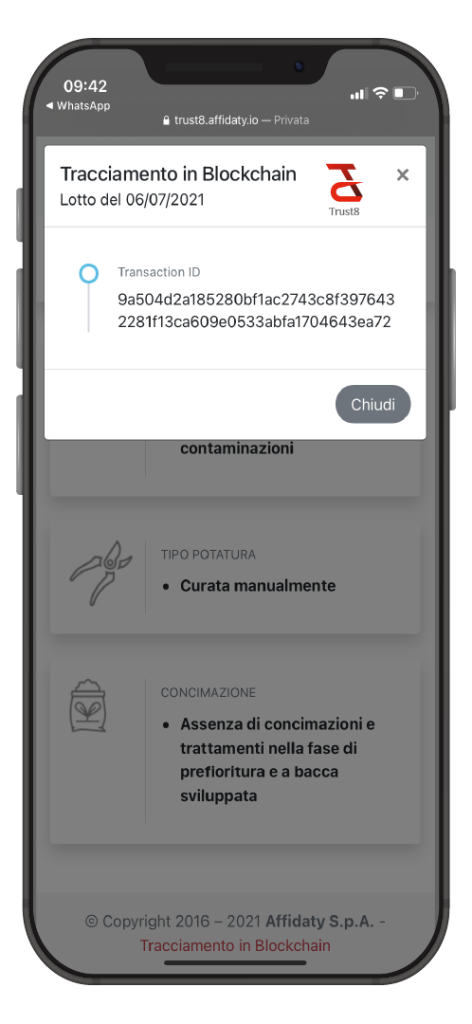
Anyone can view the product information by scanning the “Traceability in blockchain Powered by Trust8 (link here)” code with a smartphone. Currently, the first packages of certified organic blueberries are available at Conad supermarkets in Grosseto, but the company is already in contact with other GDO operators.
In a second phase, we will increasingly automate the information collection processes, so that the system begins to generate data independently, without resorting to self-certification.
A new era for blockchain traceability.
Thus, we begin to see a first technological primordial broth of cooperation between agricultural machines, sensors, and farmers, who place their trust in the technological layer of the blockchain. This is how this technology can be disruptive in the agrifood world, creating a certified environment that allows for intelligent data exchange between all actors in the process, whether they are cultivators, machinery, or robots.
All of this is possible thanks to digital identity creation and management protocols that identify each user in our technology, from humans to intelligent machines. Imagine what it might mean for an agricultural machine that, through its own wallet, makes programmed choices, pays for its maintenance, and automatically interfaces with other actors in the supply chain.
This is the not-too-distant future that we have imagined and are designing, but be careful: this does not mean replacing humans with machines, as the latter follow precise and previously programmed rules, so they perform tasks. Humans are the minds that must guide and exploit technology, according to their own experience and knowledge. Machines, whether increasingly intelligent and performing, will always need a brain to operate and a button to turn on.


 Market and Data
 _old_Become an author
 Wallet


