


Introduction
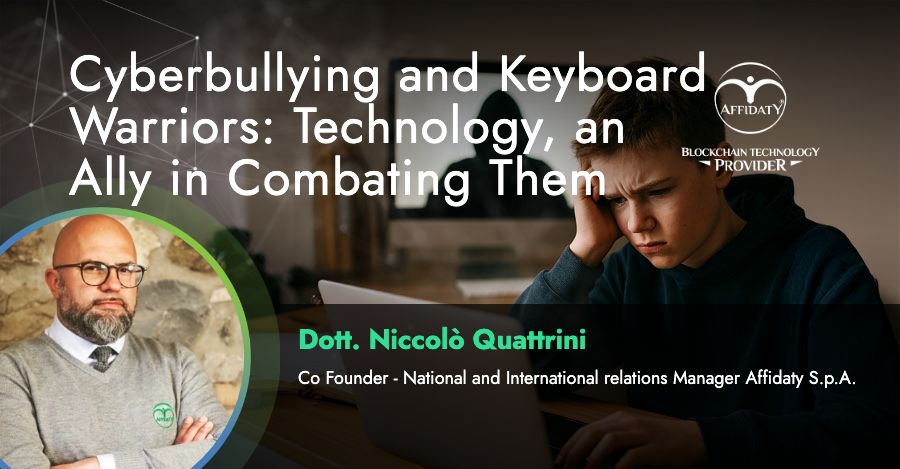
We live in an era where technology connects us like never before. Every day, we exchange messages, images, opinions, and thoughts with people living thousands of miles away. The web has become an extension of our daily lives: we work, get informed, nurture relationships, and build digital identities. But within this vast and dynamic digital universe, shadows also lurk. One of the most insidious and dangerous is cyberbullying — a phenomenon that is increasingly widespread, often invisible to adults, yet deeply devastating for its victims.
Cyberbullying takes many forms: repeated insults, public ridicule, spreading private or false information, threats, social exclusion. What makes it particularly disturbing is its persistence and pervasiveness. Unlike traditional bullying, online abuse doesn’t stop at the school bell or doorstep: it can reach the victim at any time of day or night, invading their private space and deeply harming their self-esteem.
Behind a screen, words can become weapons. And those who use them — often hiding behind a nickname or fake profile — feel legitimized to hurt, insult, and degrade. These are the so-called “keyboard warriors”: individuals who may never raise their voice in real life but become verbal aggressors online, convinced they can act with impunity. Anonymity becomes a shield, the lack of face-to-face contact dulls empathy, and the illusion of invisibility reinforces a sense of impunity.
But here’s the point: while technology has played a role in creating this problem, it can also — thanks to innovations like Web3, blockchain, and artificial intelligence — offer valuable tools to fight it. Innovation, when guided by human values and used consciously, can become a powerful ally in building a safer, more inclusive, and respectful web.
Web3: A New Way to Experience the Web
In recent years, there has been a lot of talk about Web3. But what exactly is it? Web3 is the third evolutionary phase of the Internet, aiming to decentralize the web and return control to the users. While Web1 was informative and Web2 interactive but dominated by centralized platforms, Web3 is built on the idea of a user-governed network, using technologies like blockchain, digital tokens, and smart contracts.
In the Web3 ecosystem, users are no longer mere spectators — they become owners of their data and content. This marks a profound paradigm shift: online communities can collectively decide the rules, elect moderators, determine what’s acceptable and what’s not, and even sanction those who violate the shared code of conduct. In this context, toxic behavior such as hate speech or verbal aggression can be more effectively identified, isolated, and managed transparently.
Imagine a social platform where, instead of relying on a proprietary algorithm, users vote on the most relevant content and report or penalize harmful interactions. This not only empowers users but fosters a culture of self-regulation and active participation, where respect becomes a shared and rewarded value.
Blockchain: Traceability, Accountability, and Safety
Powering this revolution is blockchain — a technology that records data in a secure, transparent, and immutable way. Every action on a blockchain leaves a permanent, visible trace. This could have a huge impact in the fight against cyberbullying.
Many haters feel free to act because they believe they are anonymous and immune to consequences. But if every message, comment, or online interaction were linked to a verified identity — even a pseudonymous but traceable one — it would be much harder to hide. Blockchain can ensure a system that protects privacy but eliminates impunity.
Think also about digital reputations: each user could have a “trust score” based on their online behavior. Respectful users would be highlighted and rewarded, while abusers would be flagged and sanctioned. This would help rebuild trust in the digital world, which is currently fragmented and polarized.
Artificial Intelligence: Preventing, Intervening, Supporting
While Web3 and blockchain provide a more secure and participatory infrastructure, artificial intelligence can act in real time to prevent and combat online hate. AI algorithms today can analyze vast amounts of text in seconds and detect language patterns associated with bullying, aggression, and discrimination.
This means offensive messages could be blocked before they’re posted, or users could receive a warning encouraging them to reflect on their words. Some platforms already use such tools, but AI can go even further. It can understand context, distinguish between irony, satire, and actual insults, and detect group dynamics behind exclusion or online mobbing.
Moreover, AI can offer immediate support to victims: suggesting psychological resources, enabling quick and guided reporting, and providing safe listening spaces. It could also help parents and educators ethically and respectfully monitor minors’ online activity, staying present when support is most needed.
Technology and Humanity: Two Sides of the Same Challenge
Of course, no technology alone can solve such a complex issue. Cyberbullying stems from a lack of empathy, poor educational models, and the need to assert oneself by hurting others. It’s a cultural, social, and emotional phenomenon that must also be tackled through education, awareness, and dialogue.
Still, technology can and must be part of the solution. The challenge is not choosing between innovation and values, but combining them. Teaching young people (and adults too) to use the web mindfully, critically, and responsibly. Educating on digital citizenship, explaining that every click has an impact, every word a consequence.
In this sense, it’s essential to involve schools, families, institutions, and tech companies in a joint effort. We need a digital culture that places the individual at the center — not just fighting hate but actively promoting respect, kindness, and empathy. Only then can we build a web that is not just safer, but more human.
A Possible Future: From Threat to Growth
The future of the Internet isn’t just about code and algorithms — it’s about ethics, vision, and collective responsibility. We can imagine a digital world where technology is no longer a weapon, but a bridge to more authentic relationships — where innovation protects instead of harms.
Picture a social network where constructive voices are heard louder than destructive ones, where mistakes lead to improvement and not just punishment, where words regain value and are not used as weapons. It’s ambitious — but not impossible.
Change won’t happen on its own. It requires commitment, collaboration, vision — and above all, belief in human potential and the idea that technology should serve us, not the other way around. If the web reflects society, then we can choose what kind of society it mirrors.
Conclusion
Cyberbullying is one of the most urgent and delicate challenges of our digital age. But we are not powerless. New technologies offer powerful tools — and if we use them wisely, we can turn the web from a space of isolation into one of solidarity, from a battlefield into a shared ground for growth.
The future of the Internet is unwritten. It’s up to us to decide whether it will divide or unite. And maybe, today, we finally have both the chance — and the responsibility — to choose.






 Market and Data
 _old_Become an author
 Wallet


