


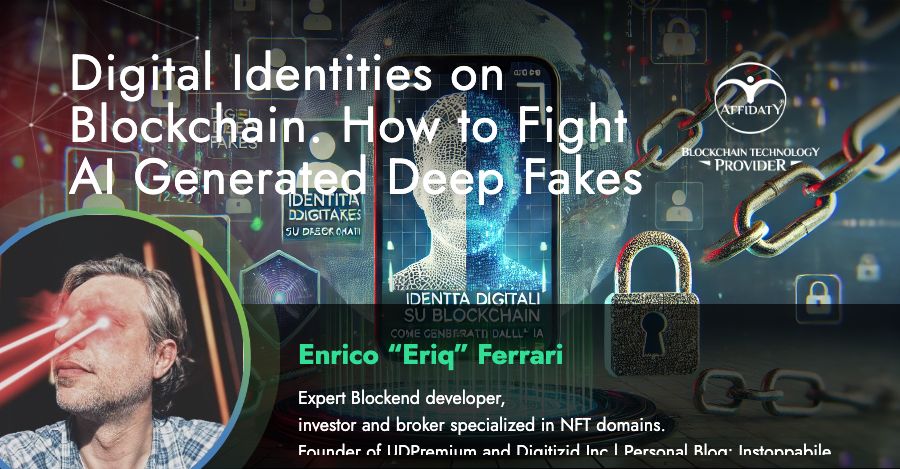
The Problem of Fake Content Generated by AI

The spread of deep fakes, or fake content generated by artificial intelligence, has become a growing concern on social media. These fake contents can take the form of images, videos, and even audio that appear incredibly realistic but are entirely fabricated. AI can create videos in which people seem to say or do things they have never said or done, and these fakes can be used to spread misinformation, manipulate public opinion, and damage the reputation of individuals and organizations.
Deep fakes pose a serious threat to society, as they can be used to create fake news, spread propaganda, deceive voters, and undermine trust in the information we consume daily. Moreover, the problem is exacerbated by the speed at which these contents can spread on social media, reaching a vast audience in just a few minutes.
The Technology of NFT Domains
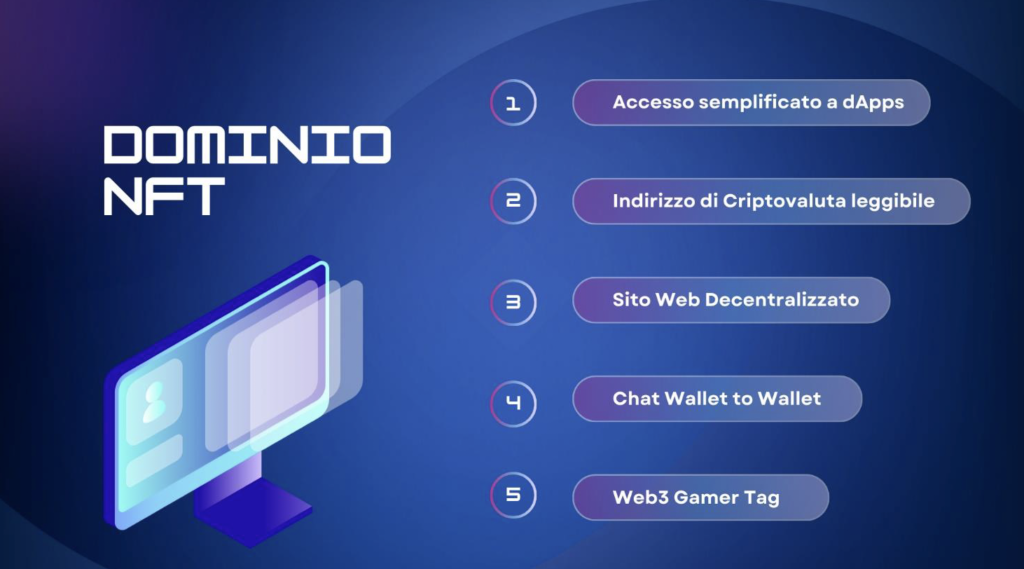
To combat the problem of deep fakes, a promising solution is represented by digital identities on blockchain, available in the form of NFT domains. NFT domains, offered by platforms like Unstoppable Domains and ENS (Ethereum Name Service), allow the creation of unique and verifiable digital identities on the blockchain. These domains are not just web addresses; they represent true digital passports that certify the user’s identity.
Thanks to blockchain, every content created and shared can be traced back to its original author. This makes it easy to verify the authenticity of the contents and identify who created them, drastically reducing the possibility of spreading deep fakes. Blockchain is an immutable and transparent ledger that guarantees the security and integrity of the stored information.
Simple and Secure Login with NFT Domains and Proof of Humanity

One of the most interesting applications of NFT domains is the possibility of using them to access multiple applications while maintaining full control over one’s data. Unlike services like Google Login, which collect and use user login data, NFT domains allow authentication without relinquishing control over personal information. This means greater privacy and security for users.
Another emerging technology in the field of digital identities is Proof of Humanity (PoH). This system uses biometric data to authenticate users through Zero-Knowledge Proof (ZK Proof), maintaining a very high degree of privacy. ZK Proofs allow the verification of a person’s identity without revealing sensitive data, ensuring that personal information remains private and secure.
PoH can be used to create a certified and unalterable digital identity, further reducing the risk of fakes and manipulation. This system can be integrated with NFT domains to provide an additional level of security and authenticity.
Access Management on Social Media to Certify Users
To certify users and ensure the authenticity of content, social media platforms must adopt a blockchain-based access management system. This system should integrate the use of digital identities on blockchain, such as NFT domains, and advanced authentication technologies like Proof of Humanity (PoH). When a user registers or accesses a social platform, they could use their NFT domain for authentication.
This domain, linked to a unique and verifiable cryptographic key on the blockchain, certifies the user’s identity without revealing sensitive information. Moreover, the integration of PoH adds an extra layer of security by using biometric data to confirm identity privately and securely through Zero-Knowledge Proofs. By implementing these systems, social media platforms can ensure that every user is who they claim to be, reducing the risk of fake accounts and the spread of deep fakes.
Integrating Blockchain into Social Media

Social media platforms can greatly benefit from integrating blockchain-based authentication technology. A pioneering example of this is Warpcast by Farcaster, the first social media platform dedicated and integrated with Ethereum Optimism Layer 2. Warpcast uses blockchain to keep identity data on-chain and content off-chain, thus ensuring greater security and authenticity.
By integrating blockchain-based authentication systems, social media platforms can certify users’ identities and ensure that published content is authentic. This not only helps combat the spread of deep fakes but also improves user trust in social platforms.
Conclusion
In conclusion, digital identities on blockchain and NFT domains offer a powerful solution to tackle the problem of AI-generated fake content. Thanks to content origin certification and user privacy protection, these technologies represent an important step toward a safer and more reliable digital environment.
Eriq Ferrari | Eriq.x | Eriq.btc


 Market and Data
 _old_Become an author
 Wallet


