


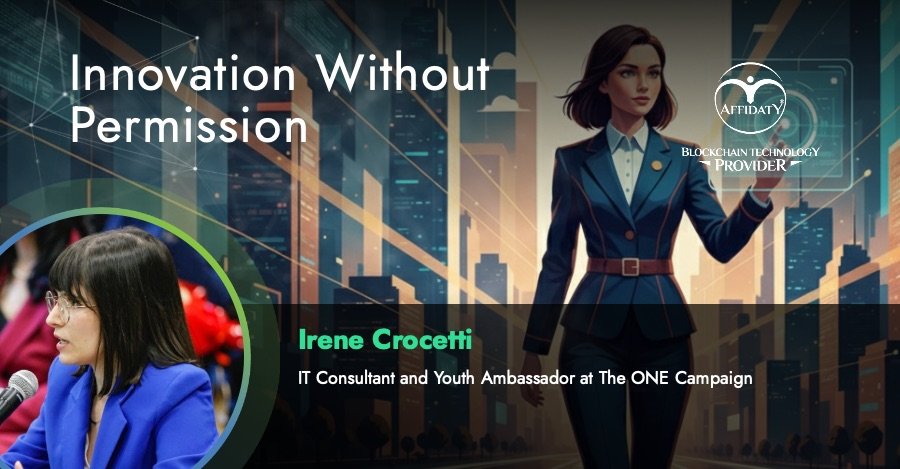
My unconventional journey from outsider to tech professional
The girl who didn’t know what she wanted to become
I had no plan. Only a recently earned language diploma and that typical nineteen-year-old feeling: everything is possible, but nothing is clear. When people asked me as a child what I wanted to be when I grew up, my answer changed every week. Teacher, pop star, veterinarian. None of those words seemed like a real, attainable job.
So, out of habit more than conviction, I chose Languages at university. It wasn’t a calling, just continuity. A choice that didn’t repel me, but didn’t spark anything either. And in the meantime, I needed a job, because studying in Rome is wonderful, but it doesn’t offer discounts.
After a brief stint at Fiumicino airport as a promoter, an unexpected opportunity arrived: a tech company was looking for a junior figure to handle data entry. No experience required. Perfect, because I had none. I accepted without knowing I was stepping into a world that would change everything.
My first encounter with a field that wasn’t expecting me
At first, my work was simple: I did what was necessary. Excel spreadsheets, data normalization, repetitive processes. But almost without realizing it, I was learning. And as I learned, a completely new ecosystem opened up in front of me: a sector that was fast, logical, full of possibilities, and sometimes tough—especially if you show up as a woman, young, and with a humanities background.
These three traits didn’t work in my favor.
Statistics confirm it: Italy ranks 63rd in Europe for digital equality. In STEM, only a quarter of technical roles are held by women. In the ICT sector, women represent just 16% of the workforce, earn on average 15% less and are less likely to advance.
Sources:
- Web3 Already Has a Gender Diversity Problem
- Global Gender Gap Report 2022
- Gender Equality Index 2020
- Shetech
- Una fotografia delle donne nel mondo Tech
Growing professionally while growing as a person
As my contract went from monthly renewals to permanent, I didn’t stay still. I studied at night and on weekends, worked full-time Monday to Friday, and built my professional identity piece by piece. I earned a degree in languages, then a master’s in international relations, then a master’s in EU project design, always while working full time. Meanwhile, what began as a data entry job was becoming something bigger: a realistic, concrete career path combining the technical skills I was gaining with my communicative nature. This is where digital stopped being just a context and became a tool.
As I moved between study and work, I began discovering the creative side of the digital world: content, communication, strategies. I found a new balance between human language and technical language. And that’s when a new ally entered the scene.
Artificial intelligence: the colleague I didn’t know I wanted
When AI started spreading, many feared it. Others dismissed it. I, instead, immediately saw an opportunity: an accelerator, an extension of my way of working, a multiplier of capabilities.
I used it to create content, prototype ideas, structure projects, improve processes. Not as a shortcut, but as an amplifier.
Because AI doesn’t replace creativity or intuition. And it doesn’t replace responsibility either: we decide what it should do and, more importantly, what it shouldn’t do.
I learned that human value doesn’t lie in producing faster, but in knowing what is worth creating. AI doesn’t imagine: it executes. It doesn’t dream: it optimizes. It doesn’t innovate: it combines. Its true potential emerges when it finds someone who gives it direction.
Living in the digital world, not just working in it
The deeper I ventured into technology, the more I understood that it wasn’t just a job: it was a new language. A way of reading the world. Digital work allowed me to unite two sides of myself I once thought incompatible:
- the analytical side, born in the tech sector
- the creative side, always seeking expression
Working in tech from a humanistic perspective is not a weakness; it’s a strength. It means being able to interpret needs, read behaviors, understand people.
In an era dominated by algorithms and AI, those who can give meaning and context make the real difference. That’s when I realized: you don’t have to be born a programmer to succeed in tech. You just have to be born curious.
Why we need more women in technology (and it’s not just a numbers issue)
Technology is where the decisions about how we will live tomorrow are made. It’s not an exaggeration: those who design algorithms, digital platforms, and AI models are literally defining the invisible infrastructures that will govern choices, opportunities, and everyday interactions. A future imagined by a few is inevitably an incomplete future.
This is why women’s empowerment in the tech sector is not a niche fight or a conference topic: it’s a strategic issue. A society that ignores women’s talent (half of its human capital) is not only unjust: it is inefficient. It wastes creativity, reduces its capacity to innovate, limits its competitiveness.
The truth is simple: more inclusive teams create more inclusive technologies. Numerous studies confirm this, including a recent report by the Capgemini Research Institute analyzing the direct link between diversity in tech teams and the quality of the digital products they develop. When people with different backgrounds, genders, and perspectives sit at the same table, technology becomes more attentive, more accessible, more suited to the complexity of the real world.
In recent years, however, the massive adoption of digital solutions and AI systems has revealed the dark side of technologies built without diversity: bias, discrimination, distorted outcomes.
This is why Diversity, Equity and Inclusion (DEI) is not a corporate accessory but an urgent necessity. The technologies we use every day must be designed by people who truly represent the society that will rely on them.
But getting there requires a shift in mindset.
It means working on education from early childhood, breaking the stereotypes that still discourage girls from approaching STEM fields, and supporting their journey with proper welfare policies and social infrastructure. We need a more fertile ecosystem, not a stricter one.
And it also requires a step forward from us, from the women who want to enter (or stay in) technology. We must allow ourselves to learn, grow, make mistakes, try again. To show up with competence, professionalism, and that quiet determination that doesn’t ask for space: it creates it.
In the end, the issue is not “adding women” to tech teams. It’s improving tech teams. More women means: •
- better products
- fewer biases
- more perspectives
I don’t want to be an exception. I want to be part of the new normal that’s coming. Because the best innovation always happens when the room holds more diversity of thought.
Innovation Without Permission
My path has never been linear, and maybe it never will be. But I’ve learned one fundamental truth: innovation doesn’t wait for anyone. You don’t need the “right” title to begin. You don’t need to resemble those who came before you. And above all, you don’t need to ask permission to enter a world that didn’t seem to expect you.
Technology is not an exclusive club. It’s an open field full of doors, some wide open, some creaking, others still closed until you try a second time.
I tried. And I succeeded.
Not only thanks to dedication, perseverance, and curiosity, but also thanks to those who believed in me: people who saw potential in a girl with no experience and opened the door for her. I’ll be forever grateful to them, and to that company that had the courage to take a chance on me.
I will keep building, trying, entering even where it seems impossible. Because the future doesn’t reward those who follow the right path, but those who have the right will.
And I’ve decided: I will build my path piece by piece. Without permission.




 Market and Data
 _old_Become an author
 Wallet


