


Foreword
Bitcoin was the first digital asset to enter the market, introduced anonymously and not attributable to any person or company. Many hypotheses exist about its inventors, but to date, there is no certainty; it is, in fact, a “gift” to humanity. What may be seen as a secondary characteristic is, in reality, part of its uniqueness, ensuring its future by making it incorruptible and immune to blackmail.
This article is inspired by a recent document issued by Fidelity Asset Manager Found (a major American asset manager overseeing $4.5 trillion). The document, titled “Why investors need to consider Bitcoin separately from other digital assets,” expresses a recent Bitcoin maximalist stance.
Summary
Entering the world we may improperly term “Crypto” presents one with thousands of digital assets. For those not familiar with the industry, navigating this diverse offering can be bewildering.
- We will briefly describe what Bitcoin is and its unique characteristics.
- We will analyze criticisms against Bitcoin, often recurring and falling into specific categories that we will examine point by point.
- We will examine other crypto assets, categorizing them into two subcategories: those facilitating smart contract implementation and services, and those solely serving speculative functions based on current trends.
- We will explore why Bitcoin is the most recognized asset but not necessarily the most profitable for all investor profiles. Each digital asset carries its potential risks and profitability.
- We will analyze the dual nature of Bitcoin, both from a speculative perspective and as an uncensorable, secure, unseizable, and store of value asset. The discussion on the latter point will intensify, requiring in-depth analysis for comprehensive understanding.
- We will identify the features that make Bitcoin unique and subsequently compare it with other digital assets, aiming to understand the utility and purpose of these distinct classes and their reasons for existence or coexistence.
- By the end of this overview, we will understand why Bitcoin cannot be assimilated with other crypto assets and should be considered separately.
What is Bitcoin?
This section is crucial for the subsequent discussion. It’s essential to distinguish between the Bitcoin token and the Bitcoin protocol—two concepts crucial to keep separate.
The Bitcoin protocol comprises rules governing the entire system’s operation, while the token can be considered the “final product” of this complex ecosystem involving various disciplines: mathematics, economics, cryptography, game theory, sociology, and finance.
The Bitcoin network is decentralized and distributed, not governed by any individual or entity. Attempts to change rules without majority consent result in exclusion. The open-source code allows proposals for changes, but majority acceptance is necessary for implementation. The game theory underlying the protocol makes malicious actions economically unviable. Even in the unlikely event of a successful attempt at corruption, it would create two separate chains, with users naturally gravitating towards the uncorrupted one.
A crucial aspect of Bitcoin is its finite nature; only 21 million bitcoins can ever exist, and this number cannot increase without majority network consensus.
Criticisms of Bitcoin

Now, let’s address the numerous criticisms, some more valid than others, that have characterized the protocol’s detractors over the years.
The first, stemming from pure ignorance, is the accusation of being a Ponzi scheme. This accusation lacks any foundation, as a Ponzi scheme involves fraudulent promises of investments in imaginary business activities, with operators collecting money instead of making promised investments, leading to eventual collapse.
Bitcoin, on the other hand, involves no promises of profit, and its token value is solely determined by market forces. While its use on the dark web is undeniable, accusing Bitcoin of illicit activities is akin to blaming the US dollar for funding drug trafficking. Bitcoin‘s percentage used for illegal activities is significantly lower than that associated with the dollar and steadily decreasing.

Recent years witnessed various exchange bankruptcies, notably FTX. This phenomenon, while positive for Bitcoin, highlights the risk of centralization in projects based on decentralization. The advice remains to assess risks carefully before holding such assets or entrusting them to a third party—embracing the mantra “not your keys, not your coins.”
Renewable Energy
The claim that Bitcoin is energy-intensive is a well-established fact, often emphasized by detractors. This argument is debunked by evidence that mining is vital for reducing pollutant emissions and optimizing power grid distribution.
- Letter from the US Congress to the EPA on the mining-environment relationship: https://bit.ly/37hu8Ue
- Response letter from the Bitcoin Mining Council: https://bit.ly/3segyIz
- Nic Carter’s perspective: “Miners are perfect energy users”: https://bit.ly/3P3WJ0y
Links from the Bitcoin Italia podcast blog
Now, let’s delve into more sensible criticisms sparking heated debates:
Volatility
With drawdowns of up to 80%, Bitcoin‘s volatility is a significant negative feature, likely tied to its relative immaturity. Over time, this volatility is expected to decrease dramatically. Concerns about bans from various nations are a non-issue, reflecting typical reactions from those misunderstanding the technology.
Scalability
Bitcoin‘s Layer 1 is not designed to handle billions of transactions, a valid critique. If Bitcoin were to attract billions of users, the network would slow to the point of being unusable. Fortunately, solutions like the Lightning Network partially address this issue, offering extreme scalability with limitations related to the trade-off between complexity and adoption, which is gradually improving. Anticipated future use of secondary layers is expected to surpass credit card transaction capacity, albeit at the expense of some security.
Power of Mining Pools
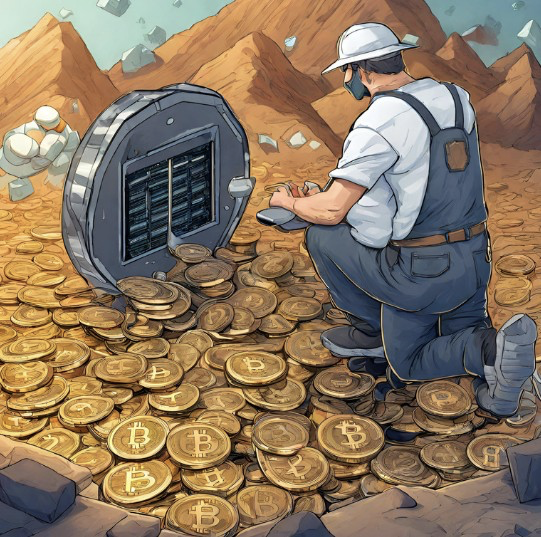
Undoubtedly, a critical aspect and the centralization point of the Bitcoin network are mining pools, particularly those linked to companies mainly registered in the USA. These pools collaborate, sharing mining revenues and are susceptible to government influence and censorship.
However, a solution has been proposed, making attempts to influence mining pools effectively irrelevant.
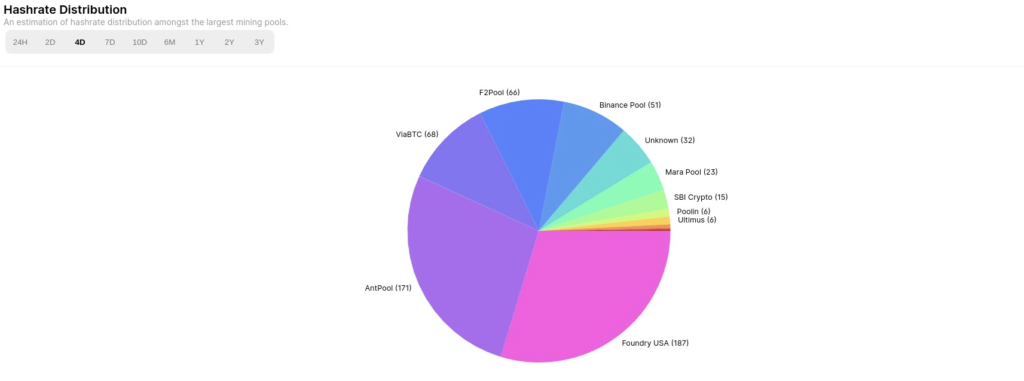
https://www.blockchain.com/explorer/charts/pools
For further exploration, refer to Federico Rivi’s excellent article on this hypothetical issue: https://bitcoinmagazine.com/business/stratum-v2-will-save-bitcoin-mining
A Look at Other Crypto Assets
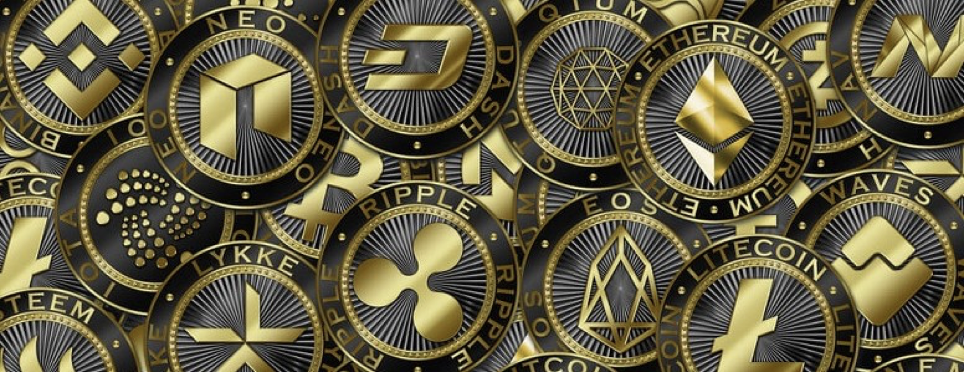
New tokens are launched every minute, and on average, a new blockchain emerges each month, promising to solve various issues. This vast sea of information and projects makes it extremely challenging to navigate.
On one hand, there are hyper-speculative projects evolving over time, linked to narratives created over the years, often associated with trending figures or objects. These projects rely solely on hype, intentionally creating expectations and interest around the ecosystem. While highly risky, they can bring significant advantages, with luck and timing playing crucial roles.
On the other hand, there are projects sponsored by major companies, aiming to leverage certain aspects of decentralization and security to create applications for the business world. The concept of having a smart contract enabling a telematic action upon certain conditions is intriguing and promises innovation. However, trust in such solutions and the potential manipulation of project creators’ data remain critical issues.
Bitcoin, currently, is not extensively used for implementing secondary-level contracts of this nature. One must question the wisdom of using a blockchain rather than software for such activities. These projects, despite reaching significant levels of complexity, lack the foundational elements to make the blockchain trustworthy. Ambitious implementations may impress, but they often sit atop shaky foundations, rendering them senseless.
“I understand, but I want to maximize profits from the crypto world.”

This common question, often pragmatically posed by those less interested in technology, revolves around various paths. Pure gambling involves randomly betting on a new project, or thorough analysis of marketing, narrative, the sponsoring party’s background, and economic power, deciding whether to enter the initial seed or pre-seed phase, aware of the high associated risks.
Alternatively, analyzing projects developing products with potential mass appeal, while acknowledging substantial risks, can yield long-term success.
Alternatively, after thoroughly understanding the technology, focusing on an asset with unique and irreplicable characteristics within a specific realm can be a strategy to explore significant evolutionary advantages.
Conclusions

The blockchain world often discusses the trilemma, emphasizing that a blockchain‘s quality is assessed by the balance between three characteristics: Security, Decentralization, and Scalability. Tensions exist, and pushing one element inevitably detracts from the others. The best blockchain is one that most effectively and equivalently respects these three elements.
In summary, various blockchains represent a significant technological creation. Transforming a centralized information database and removing a trust third party has been a radical innovation. However, a centralized blockchain is almost indistinguishable from a decades-old database, diminishing the essential qualities offered by a decentralized blockchain, such as immutability, seizure resistance, censorship resistance, and trustless design.
Likely, a secure and costly primary layer will remain, connected to countless layer 2 solutions for transaction settlement. The crucial question is, “What will be the primary layer?” Will it be a layer owned by a susceptible-to-manipulation entity, or the Bitcoin layer, entirely beyond the control of any blackmailable entity?
I leave it to the reader to draw their conclusions, encouraging them to delve into and study the Bitcoin project across its entire ecosystem to form their personal opinions.
Nicola Maganetti


 Market and Data
 _old_Become an author
 Wallet


