


Introduction
Although it may not be widely discussed outside of the world of energy professionals directly involved in the energy sector, the digital revolution is profoundly transforming the modes of distribution and accounting, opening new opportunities to enhance efficiency, transparency, and accessibility in the industry. In this ever-evolving context, blockchain has emerged as a key technology with the potential to redefine the management of energy resources and create more sustainable and resilient energy communities. As many are aware, blockchain is closely linked to the birth of Bitcoin, and since 2009, its potential has rapidly expanded well beyond digital currencies. In brief, a blockchain is a distributed and immutable digital ledger that enables secure and transparent recording of financial and non-financial transactions. Furthermore, this technology eliminates the need for intermediaries, provides the ability to securely record and share data among participants, making fraud nearly impossible and ensuring complete traceability of actions taken on it.
This article aims to provide an overview of the growing role of blockchain, both from the perspective of companies operating in the sector and from that of the users benefiting from it. It explores some use cases that demonstrate how this technology is contributing to the transformation of energy resource management in communities worldwide. Additionally, we will briefly analyze the various dimensions of impact resulting from the use of blockchain, discussing how it can improve the traceability of energy sources and reduce operating costs.
Blockchain and Energy – Use Cases
An analysis conducted by the Joint Research Center (JRC) of the European Commission examined the use of blockchain in the energy sector. This study revealed that energy companies are making significant investments in pilot projects and blockchain technology tests. The research identified four main classes of blockchain use cases in the energy sector, involving a total of 117 initiatives worldwide, with the majority concentrated in the European Union (65), the United States (14), and Switzerland (9). Over 50% of these initiatives are at least at the Proof of Concept level. The main applications include grid management, peer-to-peer energy supply and trading, blockchain-based billing, and the use of blockchain as a financing tool through Initial Coin Offerings (ICOs). Furthermore, niche markets have emerged, such as blockchain for e-mobility and the management of green certificates and carbon credits. The Ethereum platform has been the most widely used, followed by Hyperledger and others 1.
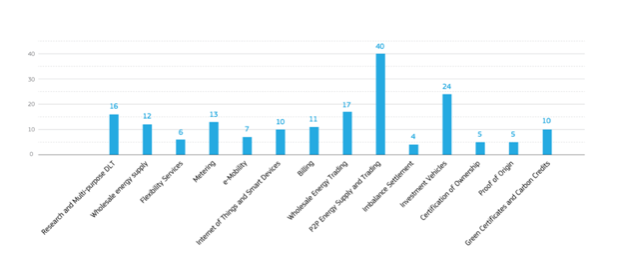
Figure 1: Type and no. of blockchain projects in the energy sector
Renewable Energy Traceability
In the context of renewable energy, blockchain has proven to be a key technology for addressing one of the most significant challenges: the traceability of energy sources. One of the most notable implementations of this solution is the WePower2 initiative, a platform established in 2018 that has gained international recognition for its ability to revolutionize the management of green energy.
The platform uses blockchain to securely and transparently record the production of renewable energy. When a renewable energy producer generates electricity, the corresponding data is recorded on the blockchain. The key innovation here is the immutability of the record, which includes various features for each recorded data point, including the energy production source and the time it occurred. This means that once the data is recorded, it can no longer be altered or manipulated.
Carbon Emission Certification
In the context of the fight against climate change, carbon emission certification plays a crucial role in monitoring and reducing the environmental impact of human activities. Blockchain has proven to be an ideal technology for addressing this complex challenge and creating digital carbon certificates that can be transparently traded and traced back to their origin. A successful example in this field is represented by Veridium Labs3, which has developed a blockchain-based platform that allows companies to immutably record carbon emission reductions and create concrete incentives for the actual reduction of their carbon emissions. Purchasing and using digitally certified carbon certificates, recorded immutably on a blockchain, is an effective way to make communication about one’s environmental performance more credible.
Decentralized Energy Grid Management (Energy Communities)
Within the energy sector, there is a particular use case where the contribution of blockchain can be crucial: energy communities. These represent an innovative model for the production, distribution, and consumption of energy, where consumers also become energy producers through renewable energy sources (RES) such as micro-wind and photovoltaics. As shown in the following graph, in recent years, numerous and growing experiences of energy communities have been observed at the European level (but not only), where energy producers and consumers are interconnected and exchange energy through various methods 4.
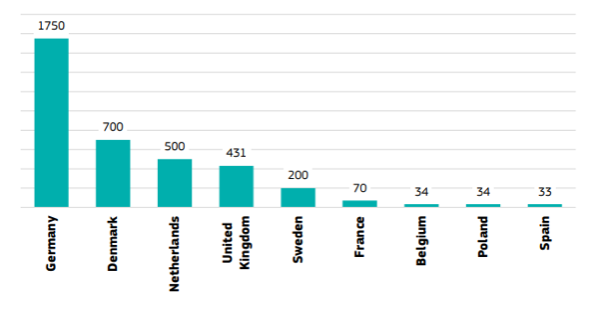
Figure 2: No. of energy community initiatives in major EU countries
This transition toward a more decentralized and sustainable energy model has opened up new challenges and opportunities. Some companies, such as LO3 Energy5, have developed blockchain-based solutions that allow users to sell the energy generated by their solar panels or other renewable sources directly to other users within an energy community. This eliminates the need for intermediaries and enables efficient and transparent transactions among participants.
These use cases represent only the tip of the iceberg of blockchain‘s potential in the energy sector. The examples mentioned above demonstrate how this technology is already changing how energy is produced, distributed, and consumed, leading to a more efficient, sustainable, and collaborative interaction with the energy grid.
Economic Impacts – What’s the Potential?
The adoption of blockchain in the energy sector has significant economic potential, with the most obvious being the reduction of operational costs through disintermediation. The use of this technology simplifies transactions by eliminating the need for intermediaries and complex contracts, resulting in greater efficiency and lower management costs, benefiting both energy companies and end consumers.
Furthermore, it can innovate business models for companies and economically involve citizens in the energy market. Users can sell the self-generated and unused energy directly to other members of their energy community, creating new earning opportunities for domestic producers, encouraging the generation of renewable energy, and contributing to the decentralization of the energy market. At the same time, blockchain offers greater financial security through the tokenization of energy assets. Investors can participate in the financing of energy projects by purchasing tokens, thereby obtaining a return on investment proportionate to the project’s performance.
Transparency and Traceability of Energy Sources
Transparency and traceability of energy sources are crucial for the transition to a more sustainable energy system, as is evident from the positions of many international organizations and public policymakers (e.g., the European Union 6).
Thanks to blockchain, it is possible to immutably record the origin and production of energy, registering every generated kWh (from renewable sources) and allowing buyers to transparently verify the source of the energy they purchase. This level of traceability is essential to ensure that claims about the production of green energy by producers are verifiable, and consumers can make informed choices.
Moreover, this technology also enhances the security of the energy grid. Its decentralized nature makes it more difficult for potential attackers to manipulate energy data or compromise the network. This strengthens the resilience of the overall energy system.
The Future Potential of Blockchain Technology in Energy
The widespread adoption of blockchain in the energy sector is still in development, but as the first tested solutions are showing, the prospects are promising.
In particular, the adoption of blockchain as a standard for tracking energy production, sale, and consumption (especially renewable energy) could lead to greater democratization of the energy sector, enabling consumers to actively participate in energy production and distribution. This could further promote the adoption of RES, in line with the European agenda, thereby reducing dependence on fossil fuels and contributing to the fight against climate change.
Additionally, blockchain can help solve the problem of intermittent energy from renewable sources. Through blockchain-based systems, excess energy produced in one area can be shared with distant communities, improving the overall efficiency of the energy system.
Other possible impacts of the widespread use of this technology include:
- Reduction of Operational Costs: Automation and the reduction of the need for intermediaries could reduce the operational costs of the energy industry, potentially resulting in more affordable rates for end consumers.
- Improvements in Energy Efficiency: Blockchain could enable more precise control of energy distribution, optimizing resource usage and reducing waste.
- Incentives for Renewable Production: Blockchain could facilitate the rise of financial incentives for renewable energy production, further encouraging the transition to more sustainable sources.
- Global Energy Markets: Blockchain could pave the way for global energy markets, allowing communities to trade energy directly on a global scale.
- New Business Opportunities: The emergence of new blockchain-based applications and services could create new business opportunities for companies and entrepreneurs in the energy sector.
In summary, blockchain technology is laying the groundwork for a radical transformation in the energy sector, with significant economic and environmental benefits. However, there are still challenges to overcome, such as the need for appropriate regulations, interoperability between different blockchain platforms (bridging), and widespread adoption. To provide a more accurate picture of the prospects, a study by the Politecnico di Milano (Electricity Market Report) estimates that by 2025, there will be approximately 40,000 energy communities involving around 1.2 million households, 200,000 businesses, and 10,000 SMEs 7.
Conclusions
Blockchain represents a key element in the transformation of the energy sector toward a more sustainable and decentralized future. Its ability to improve the management of energy resources, reduce costs, and increase transparency offers unprecedented opportunities for energy communities worldwide.
While many countries are seeking to regulate the sector and provide a clear legal framework for businesses and citizens to operate within, it is important to remember that the potential of blockchain in energy is still largely unexplored. Widespread adoption will require commitment and collaboration among industry stakeholders, as well as a positive and facilitating approach from legislators. In my personal opinion, while regulation will play a key role in determining the speed of blockchain adoption within the energy sector, this technology is poised to lead a revolution that will help create a better energy future for all.
Sources:
1 https://publications.jrc.ec.europa.eu/repository/handle/JRC128651
2 https://www.blockdata.tech/profiles/wepower
3 https://www.veridium.io/about.html
4 https://publications.jrc.ec.europa.eu/repository/handle/JRC119433


 Market and Data
 _old_Become an author
 Wallet


