


Introduction
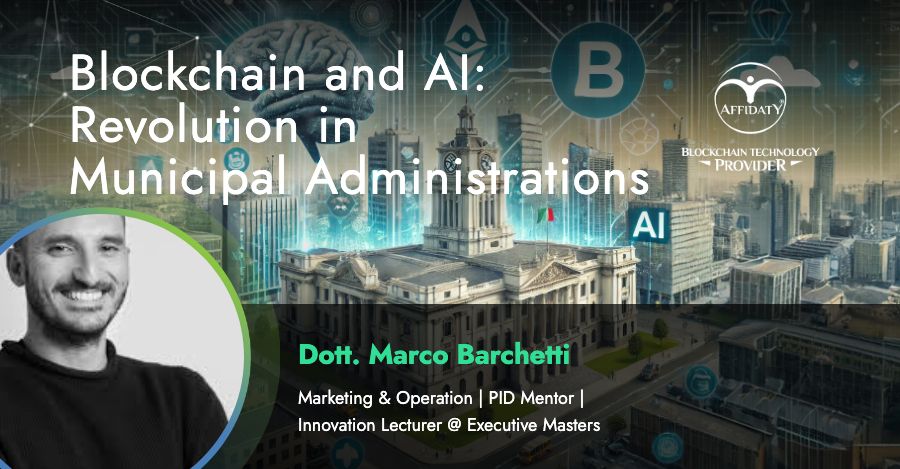
Italy, with its numerous municipal administrations, stands to gain significantly from the adoption of blockchain and artificial intelligence (AI) technologies. These innovations offer the potential to drastically improve the transparency, efficiency, and security of public services, addressing the needs of citizens while optimizing available resources.
What is Blockchain?
Blockchain is a distributed digital ledger that securely, transparently, and immutably records transactions. Each transaction is verified by the network and added to a block, which is then chronologically linked to other blocks, forming a chain. This structure ensures that data cannot be altered once recorded, making blockchain particularly suitable for managing sensitive information and transactions.
The Blockchain Market
The global blockchain market is experiencing rapid growth. According to MarketsandMarkets, the blockchain market is projected to increase from $7.4 billion in 2022 to $94 billion by 2027, with a compound annual growth rate (CAGR) of 66.2% (MarketsandMarkets). This growth is driven by the adoption of blockchain across various sectors, including the public sector.
Applications of Blockchain in Italian Municipal Administrations
Registry and Vital Records Management
Italian municipal administrations can use blockchain to enhance the management of registry records, property deeds, and birth certificates. A practical example comes from Estonia, where blockchain is used to ensure the security and accessibility of public data through the X-Road system (Fact.MR).
Transparency in Public Tenders
Blockchain can guarantee the transparency and integrity of public tenders. Each bid can be recorded immutably and made publicly accessible, reducing the risk of corruption. For instance, the city of Zug in Switzerland has adopted a blockchain solution to enhance the transparency of tender procedures (MarketsandMarkets).
Electronic Voting
Implementing a blockchain-based electronic voting system can ensure that each vote is recorded securely and anonymously. This system could make local elections more accessible and secure, reducing the risk of electoral fraud. During the last municipal elections held in Lecce, various issues highlighted the need for a more transparent and secure voting system. According to information reported by TGCOM24, the voting in Lecce was characterized by chaos and disorganization, with significant problems in managing the ballots and vote counting (Fact.MR).
The implementation of a blockchain-based electronic voting system could resolve these issues, ensuring that each vote is recorded securely and anonymously, thereby enhancing citizens’ trust in the electoral process.
Waste Management and Recycling
Blockchain can be used to monitor and manage waste collection more efficiently. For example, in Seoul, a pilot project used blockchain to improve recycling rates and reduce operational costs, encouraging citizens to actively participate in waste separation (MarketsandMarkets).
Payments and Smart Contracts
The use of blockchain-based smart contracts can automate and secure payments and other agreements. These contracts automatically execute the stipulated clauses upon the occurrence of certain conditions, reducing the need for intermediaries and minimizing execution time and costs. An example is the Smart Dubai project, which uses smart contracts to improve the management of public services (Fact.MR).
Artificial Intelligence and Blockchain
The integration of artificial intelligence with blockchain can lead to further improvements in public administration. AI can analyze large volumes of data recorded on the blockchain to identify patterns and predict issues, improving the planning and responsiveness of public administrations. For instance, AI algorithms can be used to optimize urban traffic management or predict infrastructure maintenance needs. The United Nations’ “AI for Good” project has demonstrated how AI can be used to enhance the efficiency of public services and the quality of life for citizens (Fact.MR).
Conclusion
The adoption of blockchain and artificial intelligence in municipal public administrations can revolutionize public management in Italy, making it more efficient, transparent, and secure. With strategic implementation, Italian municipal administrations can become a model of administrative innovation, improving the quality of services offered to citizens and strengthening trust in the public system.





 Market and Data
 _old_Become an author
 Wallet


