


Let me introduce myself: my name is Michele Zilocchi, creator of the growing brand Mike Zillo, operating mainly in the English-speaking market. This is my first content for this blog and I am happy and grateful to have been given this opportunity to share some of my thoughts with you!
For a few months now, there has been talk of Web3 (pronounced Web Three), so much so that it has become an absolute new trend for the beginning of 2022. However, when I see it this way, I still remember when:
- in the late ’90s DJs were popular, thanks to the advent of platforms;
- in the early 2000s, everyone became a photographer thanks to the advent of smartphones;
- in the early 2010s, many became trainers or improvised as such;
- in the early 2020s, Blockchain was a must for its phenomenal applications.
There is nothing wrong with the existence of trends, but then the work becomes to investigate where the quality and real opportunities really lie.
For a few months now, we have been hearing a lot about Web3, which is nothing but the evolution of Web1 and Web2. An internet integrated into Blockchain. Web 1.0 is commonly understood as the time frame between the early 1990s and 2004 with predominantly static websites, while Web 2.0 refers to a new approach to websites, dynamic, intended as interactive platforms and no longer just as representative screens.
Web3 (or Web 3.0) is a new concept of the internet where the power and control are being shifted from large entities back to the users. To do this, Blockchain technology is already being used, in order to ensure greater transparency and decentralization thanks to a relocation of the servers that validate the contained information.

Jack Dorsey, co-founder and former CEO of Twitter, has an interesting vision, stating that Web3 is not a complete panacea, but simply a way to shift power from current giants (mentioning Facebook) to Venture Capital (source).
To operate in Web3, integrated into Blockchain, it is necessary that the blockchain is sufficiently fast and economical to efficiently perform the various activities and for this reason, the most used are Binance Smart Chain, Polygon, and Avalanche, among others.
One of the most relevant applications of Web3 is the so-called Do2Earn, which literally means “Do to Earn”. In the “doing”, there are a lot of possibilities and we can, for example, find gaming metaverses, in the perspective of Play2Earn, training platforms, in the perspective of Learn2Earn, streaming platforms with a Watch2Earn or Listen2Earn.
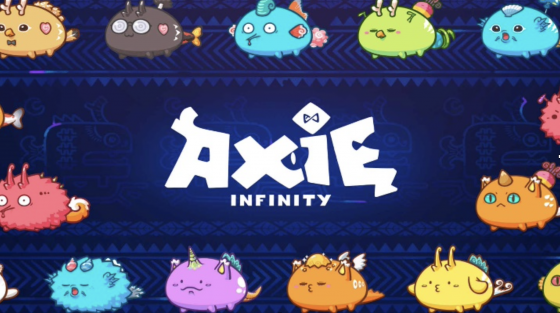
Some relevant ecosystems of this revolution are precisely the growing and developing metaverses. The ecosystem will usually start from a tokenomics that provides a reward for users who perform certain actions within the ecosystem. In a Play2Earn type metaverse, I feel like mentioning Axie Infinity, Gala Games, and others that are growing.
One particular, emerging one is Osimi City, which will be one of the first to be inspired by the well-known game Grand Theft Auto, which has produced a twenty-year success.

The key to these ecosystems is the ability for users to be rewarded in tokens, in proportion to their performance within the game, their winnings in prize tournaments, and from staking acquired NFTs. Yes, because often to participate in contests, competitions, and have access to exclusive events, you need to own an NFT.
It is almost a given that these incentives to engage users in these ecosystems should not become a bait and switch, but an organic and sustainable method to encourage functionality and meritocracy.
During the evolution of Web3, we will see more and more decentralized applications, whereby users will truly be in control of their own data, encrypted and possessed only by the owner of the associated wallet. Potentially, we will no longer witness the sale of our personal data to third parties for advertising or profiling purposes.
My invitation to you is to “embrace the revolution,” try challenging one of these Web3 ecosystems, and experience this new model of decentralization.
The starting point is what stops most people.




 Market and Data
 _old_Become an author
 Wallet


