


Abstract
This article aims to trace a logical framework for the contextualization of three concepts that, after being extensively debated at a scientific level, are increasingly penetrating the policy-making arena and investment choices.
The three concepts in question are social innovation, impact finance, and blockchain technologies.
The reasons behind the choice of writing on this topic are multiple, and arise primarily from the need to create convergent frameworks between the drives to rethink the processes of value generation (business models, development models) and processes of inclusive and enabling distribution of resources and opportunities aimed at reducing the level of social inequality without resorting to welfare approaches.
The steps through which I will try to represent the integration of the three concepts are as follows:
Analysis of the underlying meanings of the three concepts; Incremental integration between social innovation and impact finance; Illustration of the potentially activatable scenarios from this integration thanks to the use of the philosophy underlying blockchain technologies.
Introduction
This brief article is inspired by and dedicated to the philosopher Bernard Stiegler, who passed away a few weeks ago. His thinking will be crucial for understanding the essence of technology in its most proper sense: techno-logos, or the intrinsic relationship between the development of technique as an identity precondition to the understanding of human development and its language.
The research he conducted has hinted at a completely open and decisively marked future based on the direction we will be able to give to technological development, understood as pharmakòn, which can take on the function of poison or cure.
What lies in the middle and will determine one direction or the other is ultimately the reconquest of Politics, understood in its most pregnant sense: the activity of addressing and caring for the common destiny, generating a field of the imaginary in which Institutions play the fundamental function of containing the dispersion of energy (entropy) produced by the anthropocene.
Stiegler calls it negentropy, and, observing carefully the contours of this analysis, it appears precious to give a systemic reading of what is happening in the socio-economic system.
But what the philosopher leaves us, the legacy we are called to invest in the field of emotions and new indispensable drives more than to be kept in the warehouse of melancholic enchantments, is the new view of the world and the extraordinary opportunity of the human to reorganize unthinkable and unplannable resources to be able to “surprise the catastrophe”.
Social innovation The most accredited definition of social innovation reads
“We define social innovations as new ideas (products, services, and models) that meet social needs (more effectively and efficiently than existing alternatives) and that at the same time create new relationships and collaborations. In other words, innovations that are good for society and that increase the possibilities of action for society itself” (Robin Murray, Julie Caulier Grice, and Geoff Mulgan, The Open Book of Social Innovation, 2010).
Starting from this definition, it is possible to deduce 3 elements that characterize social innovation:
The “novelty” of the ideas proposed in response to social needs; The greater effectiveness and efficiency that the processes resulting from these ideas must contribute to achieving; The creation of new social relationships and collaborations.
I would focus on the third element, considering the sense of the first two to be easily intuitive. The creation of new social relationships should not be understood as a mere practice of stakeholder management, but as the main requirement with transformative potential.
The real objective is for the new social relationships generated by social innovation processes to have the ability to emancipate the recipients of a service/project from the social need that justified its creation, gradually breaking the bond of dependence and altering the mechanical separation between production and consumption.
Here, then, is the heart of social innovation: enabling those with social needs to move from passive recipients of services to protagonists of innovative solutions.
This is where a very important point of contact between social innovation and social impact finance comes in.
Impact finance
Impact finance is a financial paradigm that tends to link investment choices not only to financial return expectations but also to expectations of generatable value, understood in the triple sense (economic, social, and environmental) and measurable based on the impacts that investments themselves can produce.
At the same time, impact is the metric by which the success of social innovation initiatives can be measured in terms of the ability to solve social needs in the medium to long term and enable recipients to emancipate themselves from their condition of need.
This point of contact, therefore, makes impact finance an instrumental element of social innovation: where social innovation initiatives are successful, and such success can be demonstrated through impact measurement and evaluation, the conditions would be created to replicate and scale them, making them strategic programs and then policies thanks to the contribution of financial resources that would come out of the dichotomy “grants vs. venture capital” and become anchored to the positive change effectively generated.
The second connection is intrinsic, relating to the very architecture of impact finance schemes.
By observing them carefully, we note that they are the result of a series of interactions (figure 1).
Figure 1 – an impact finance scheme

The first interaction is between a Commissioner (public or private) and an organization that intermediates between the Commissioner himself and the Investors. This interaction is based on an outcome contract, which outlines the forms of agreement regarding the outcome objectives to be achieved and ties payments to these objectives (in whole or in part).
For this interaction to be effective, it tends to take the form of co-programming, or collaborative identification of the objectives to be achieved, also based on listening and collecting ideas from those who have greater proximity to those who live in the condition of need to which the project/program is aimed.
The second interaction is between this intermediary and the service provider (one or more organizations that produce the innovative solution), with the aim of engaging the subjects capable of combining innovative capacity and efficiency. This interaction also requires a high degree of collaboration, taking the form of co-design, or the choice of specific objectives to be achieved with the selection of the best ways to have the most efficient relationship between effectiveness and risk.
The third interaction is between the service provider and the recipients of the service (here defined as the target population): based on what has been described above, it is evident that this interaction is very relevant to obtain an actual synergy between social innovation and impact finance. The more the service provider is able to involve recipients in the ideation, creation, delivery, and management of the innovative solution (in other words, the more it is able to put in place a co-production process), the more the impact finance scheme will foster the development of social innovation.
The fourth interaction occurs between the subject (third party and independent) identified to evaluate the impact of the project/program and the commissioner. In this case, we are facing the opportunity to carry out a co-evaluation process, to reduce information gaps between the different actors and make evaluation more and more a moment of trust building and less and less a judgment or ranking.
The fifth interaction concerns the same actors as the first interaction and relates to the financial consequences determined by the impact evidence that emerges during the evaluation phase. At this stage, the commissioner, having taken note of the impact generated and demonstrated, ties his resource transfers to the level of impact achieved with respect to the predetermined objectives and determines the realization of a co-investment.
When the collaborative characters (co-programming, co-design, co-production, co-evaluation, and co-investment) are present in the five interactions described, we are facing a complete process of value co-creation among different stakeholders who bring together knowledge, skills, experiences, and resources to meet a social need.
The coexistence of public and private actors maintains the essential balance between effectiveness (the ability to solve the need) and efficiency (doing so with the least costly solution) and creates convergence towards the generation of value by subjects with distinct objective functions but bound by the connective ring of impact.
Going deeper, we discover something even more interesting, starting from the observation of Figure 2.
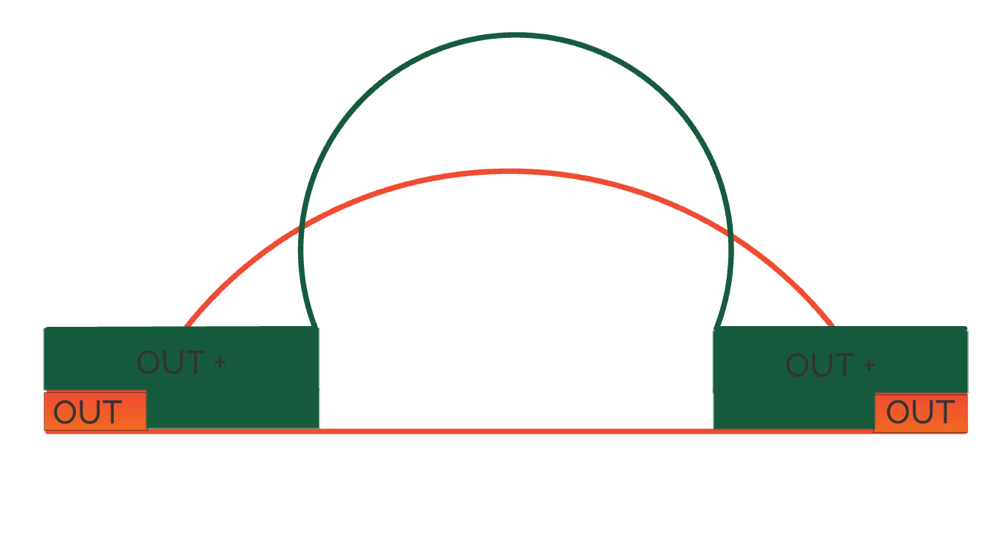
The two curves (in orange and green) represent social distribution, distinguishing central areas (in white) from tails (colored in green and orange).
The included individuals, those who have an active role in economic and democratic processes (because they have income and express their ideas/preferences through voting or other democratic participation processes), fall within the central areas, while the excluded individuals, those who do not have an active role in the economic and democratic life of a particular country or context, fall within the tails.
The two colors indicate what happened after the global economic crisis of 2007: increasing shares of the population moved from being included to being excluded, with a strong impact on new generations (see the youth unemployment rate) and on more disadvantaged territories (see maps of territorial inequality).
Based on these foundations, one of the most well-known international movements globally, Occupy Wall Street, claimed “we are 99%,” emphasizing the representation of those excluded from the financial economy. Similarly, with a definitely more scientific method, some researchers speak of a “rising invisible majority,” describing in detail the phenomenon presented here.
Figure 2 – Representation of the invisible majority
Observing social innovation and impact finance from this perspective, we could say that the former aims to bring back the shares of excluded citizens into economic and democratic processes.
To give an example, think of the expression “innovating to include” used by the Municipality of Milan to describe the approach to social innovation policies or many other experiences of urban and social regeneration that have developed unevenly in different territories.
The latter, impact finance, aims to catalyze the resources of the included towards those social innovation projects/programs capable of active inclusion.
So, here is the connection we were talking about: social innovation and impact finance as allies to reduce social and territorial inequalities in a generative and transformative key and no longer in a welfare key.
In fact, the resources collected and invested through impact finance schemes come from two sources:
- From the savings that the included can invest in financial securities (hence the growth of ethical securities, social bonds, impact bonds, and so on) collected by evolved financial operators who put impact at the center of their mission (such as BlackRock with its impact strategy and the various impact funds emerging worldwide).
- From taxes paid by those who have income (thus by the included) and managed by the government in its various forms.
Therefore, when a public-private partnership is realized on an impact finance model, a transfer of resources from the included to the excluded is taking place, creating the conditions for the included to grow and support those who are still outsiders.
Impact-chain: the potential released by social technologies
If we try to draw horizontally the process described in Figure 1, we would notice a chain.
The chain shows a dense network of interactions, starting from the opportunity to jointly invest the resources available and provided by the included citizens, which, ultimately, can be traced back to private savings and taxes paid.
The ultimate goal is to radically innovate investment patterns so that they can trigger redistributive and enabling changes.
In other words, solutions to social challenges can be found by stimulating collective creativity and ingenuity, making social actors no longer mere recipients or intermediaries but protagonists of value creation.
In the perspective analyzed so far, blockchain technologies can play a crucial role, which can be reduced to 3 main functions:
function of process optimization; function of relationship between processes; function of trust creation. First of all, individual processes need considerable optimization in terms of managerial performance.
Referring to the definition we have assumed of social innovation, distributed technologies allow data to be traced, aggregated according to multicentral logics, to close the loop of continuous improvement by providing awareness of performance levels and therefore being able to provide evidence of the incremental capacity of each innovation proposal.
The second relevant aspect concerns the possibility of enabling relational knowledge both within impact finance schemes and between different experiments.
Regarding internal relations, blockchain technologies play a crucial role in unlocking the steps conditioned by the occurrence of a given event.
For example, consider the cashability evaluation related to impact analysis, where it is necessary to certify the ability of a positive social change to provoke cost reductions/increases in revenues. In this type of evaluation, the management of the feedback released by the outcome payer, or those stakeholders who would benefit economically from the occurrence of an outcome, is particularly important.
Distributed technologies, therefore, would be valuable for managing the complexity of feedback flows and for making information universally available.
For example, think of investments in the regeneration of skills and human capital, which are being discussed in view of the allocation to be made for the Recovery Fund. If the goal of the projects being invested in is to improve skills and employment, certifying the occurrence of positive outcomes requires the feedback of subjects able to attest to the growth of skills and the creation of new jobs.
The management of the “signal” and the feedback that certifies its significance requires continuous interactions and validations, for which blockchain-based data certification methods would make management smoother and safer.
Regarding external interactions, i.e., between different experiments of impact finance models, these technologies allow, precisely by making information universally available (and certified), to expand the informational set of individual experiences and to establish trans-territorial networks between those who practice social innovation. This aspect would finally make it possible to synergistically address social and territorial inequalities, no longer having to adhere to dichotomous center-periphery or urban-rural area logics but connecting territories based on knowledge and experience exchanges, also bringing together development paths made parallel or even alternative by a sectoral and departmental view of possible directions for development and social cohesion.
Finally, the adoption of open protocols that can bring together the perspective of micro-management with that of complex process governance, transparency about the qualitative and quantitative characteristics that desired events must have to generate a consequence, accessibility of created knowledge and signals that determine agents’ behaviors are essential elements to create trust towards impact-oriented change. In this regard, blockchain technologies can assume a much more symbolic than instrumental role: the synergy between technologies and social research is, and will increasingly be, the way to extricate ourselves from dystopian scenarios in which automations, digitalizations, and all other innovations created by humans risk opening the way to the nihilism of automatic profit, accessible to a few and unhappy for all.
If it is true, as I have tried to describe, that social innovation would derive enormous benefits from integration with blockchain technologies, it is also worth emphasizing an aspect that is little remarked upon, namely that it is first and foremost technological development in its broadest sense that has a great need to reconnect with social needs and community requirements in order to enable what the philosopher Bernard Stiegler calls “the re-enchantment of the world”.


 Market and Data
 _old_Become an author
 Wallet


