


Intro
Beneath the radar of mainstream media, away from the spotlight of current affairs, Islamic Finance has been steadily weaving its way into the conventional economic landscape, demonstrating its potential for growth and resilience amid the many economic fluctuations present in the global market. While it may initially appear as a nascent sector compared to the well-established Western financial system, market research has shown that the continuous growth of Islamic financial activities makes it impossible to dismiss as a niche phenomenon. Islamic Finance activities and Shari’ah-compliant products are now present in more than seventy-five countries, both Muslim and non-Muslim, with a current value of approximately $3.4 trillion and forecasts predicting growth to about $5 trillion by 2025. Among Islamic Finance activities, more than 25% is dedicated to Sukuk, surpassing $750 billion in recent years, with promising growth prospects in the short to medium term.
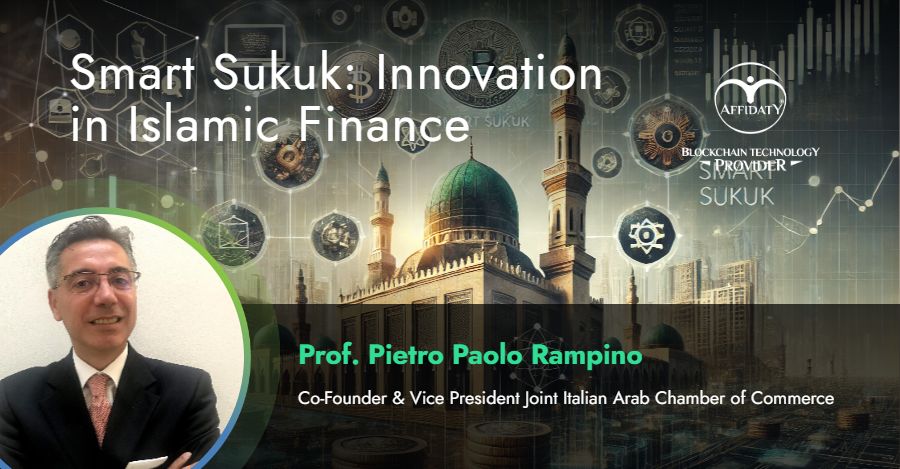
In recent years, Islamic Finance has seen remarkable development, partly due to the adoption of new technologies. The Islamic financial industry is enjoying exponential growth and significant expansion, benefiting all players, regardless of their faith, location, or socioeconomic status. Among the most promising innovations are Smart Sukuk, which represent a significant breakthrough in the world of Islamic Finance by combining Shari’ah principles with blockchain technology, offering a more transparent, efficient, and accessible way to issue and manage Sukuk. This article aims to explore what Smart Sukuk are, how they work, and what advantages they offer compared to traditional Sukuk.
What is a Smart Sukuk?
A traditional Sukuk is a financial certificate that complies with Shari’ah principles, the Islamic law that prohibits interest. Unlike Western bonds, Sukuk are not debt instruments but represent shares of ownership in a project or tangible asset, and investors earn a portion of the profits generated by the underlying asset rather than fixed interest. While a conventional bond is a promise to repay a debt, Sukuk involve ownership of a share in a debt (Ṣukūk Al-Murābaḥa), an asset (Ṣukūk Al-Ijāra), a project (Ṣukūk Al ’Istiṣnāʹ), a business (Ṣukūk Al-Mushāraka), or an investment (Ṣukūk Al-Istithmar). Consequently, they are interest-free instruments and are particularly based on the Profit and Loss Share (PLS) principle, ensuring the segregation of business risk.
Sukuk, as an alternative and/or supplementary source of financial procurement for companies and government entities, are tools that allow for the development of infrastructure projects within the country (roads, bridges, ports, hospitals, schools, housing, etc.) and support the government’s budgetary debt. Smart Sukuk are an advanced version of traditional Sukuk that leverage blockchain technology. By integrating this technology, these financial instruments use smart contracts to automate various stages of the financial process, such as fundraising, issuing ownership certificates to investors, managing payments, and distributing profits.
Smart contracts are self-executing programs that automatically carry out the terms defined within them. For example, when an institution issues Smart Sukuk, it can create a smart contract that automatically collects funds from investors. In return, investors receive digital tokens representing their share of ownership in the Sukuk. When it is time to distribute profits, the smart contract automatically executes payments to token holders, following predefined rules without the need for manual intervention. This automation increases the transparency and security of the process, as all transactions are immutably recorded on the blockchain, a kind of distributed digital ledger. By reducing the need for intermediaries, Smart Sukuk lower operational costs and speed up transactions, which is particularly relevant for Sukuk, as they require a high degree of compliance with Shari’ah religious and legal norms.
How do Smart Sukuk Work?
Smart Sukuk are issued on blockchain platforms where tokens are created to represent the Sukuk itself. These tokens can be bought, sold, and traded on digital platforms, similar to cryptocurrencies, allowing for greater flexibility and accessibility for investors. The process of Smart Sukuk begins with issuance. The issuing entity creates a Sukuk offering on the blockchain, establishing the terms and conditions through smart contracts. These contracts are programmed to automatically execute the established rules and conditions without the need for intermediaries, thus ensuring transparency and security.
Investors can then participate by purchasing the tokens that represent the Sukuk, thereby obtaining a proportional stake in the project or underlying activity. The distribution phase occurs when investors purchase the tokens, which represent a share of ownership in the project financed by the Sukuk. Since the blockchain is decentralized, investors can monitor the status of their investments in real time, ensuring complete transparency on the use of the funds raised.
The management of Smart Sukuk is automated through smart contracts, which handle the payment of returns to investors based on the profits generated by the underlying project. This automated process reduces the risk of human error and increases operational efficiency, as payments are distributed directly to the investors’ digital wallets. Upon Sukuk maturity, the redemption phase is entered. Investors can redeem their tokens, receiving back their invested capital along with the accrued returns. This process is managed transparently and securely, thanks to the immutable nature of the blockchain, which ensures that all transactions are recorded and verifiable.
Therefore, Smart Sukuk not only comply with the principles of Islamic finance but also offer significant advantages in terms of efficiency, transparency, and accessibility through the use of blockchain technology.
What are the Advantages of Smart Sukuk?
Among the main advantages of Smart Sukuk, transparency is a key element: thanks to the decentralized and immutable nature of the blockchain, every transaction can be traced, providing complete visibility over the use of funds, a fundamental characteristic for ensuring compliance with Shari’ah rules. Moreover, the digitization and automation of processes through smart contracts significantly reduce operational costs associated with the issuance and management of Sukuk. This cost reduction occurs because the need for traditional intermediaries is eliminated, making the process more efficient.
The speed of transactions is another notable advantage, as blockchain allows for the rapid execution of operations—a beneficial factor for investors and financial institutions operating in global markets and requiring real-time operations. Another benefit of Smart Sukuk is accessibility: by allowing investments to be divided into smaller shares, these financial instruments become accessible to a wider audience, including retail investors. This feature democratizes access to Shari’ah-compliant investments, enabling even small savers to participate in Islamic financial markets.
These advantages translate into a greater capacity to raise funds for socially and economically significant projects, as demonstrated by the experience of platforms like Blossom Finance, which issued the first Smart Sukuk based on a Mudarabah structure aimed at financing micro-enterprises and social projects in Indonesia. This initiative allowed for more efficient and transparent fundraising compared to traditional methods, eliminating the need for costly intermediaries and reducing the time and costs associated with transactions.
Thus, the future of Smart Sukuk looks promising, with the potential to radically transform the landscape of Islamic Finance. By combining Islamic principles with advanced technology, they offer a modern and advantageous alternative for investors and issuers of Islamic financial instruments. As regulation continues to evolve to adapt to these new technologies, Smart Sukuk are poised to play an increasingly important role in the Islamic financial sector and beyond, helping to make it more inclusive.regulations continue to adapt to these new technologies, Smart Sukuk are poised to become a fundamental component of the future of Islamic finance.


 Market and Data
 _old_Become an author
 Wallet


