


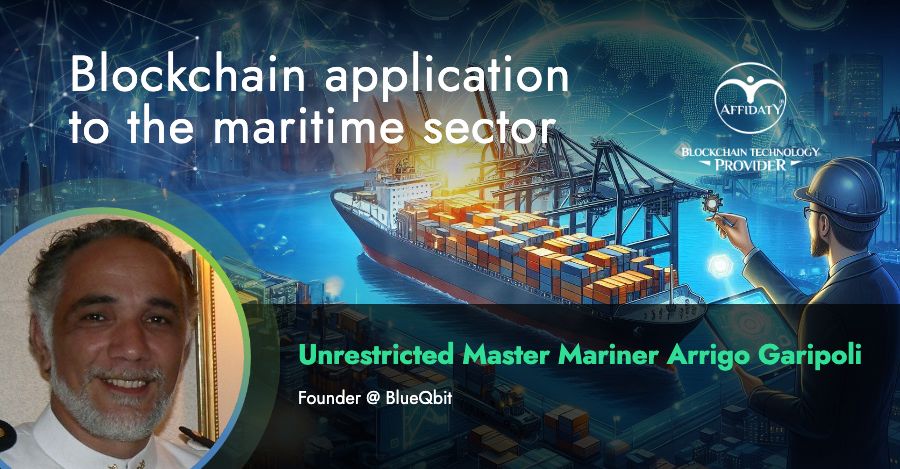
Introduction
The maritime sector, being one of the fundamental pillars of global logistics, is constantly seeking innovative solutions to improve operational efficiency, reduce costs, and ensure greater security in transactions. In recent years, blockchain technology has captured the attention of many industries, including the maritime sector, promising to radically transform the management of data and transactions.
Blockchain: Foundations of Transparency and Efficiency
Blockchain, a form of distributed digital ledger, offers enormous potential in the maritime sector. It allows the creation of shared and immutable records, where transactions can be recorded transparently and securely. This eliminates the need for central intermediaries, reducing transaction times and costs and ensuring greater trust among the parties involved.
Blueqbit: Leading Maritime Innovation
BlueQbit has embraced the challenge of fully leveraging the potential of blockchain in the maritime sector.
Founded by a team of logistics and technology experts, BlueQbit has developed innovative solutions to address the sector’s most pressing challenges.
Supply Chain Traceability
One of the main advantages offered by blockchain is the ability to accurately track and record the journey of each good along the supply chain. BlueQbit has developed a blockchain platform that enables companies to monitor the transport of goods in real-time, from production to final delivery. This not only optimizes supply chain management but also provides important traceability that can be crucial for ensuring regulatory compliance and food safety.
Simplification of Documentation Processes
The maritime sector is known for the large amount of documents and certifications required for the import and export of goods. Blueqbit has developed a blockchain-based platform that digitizes and simplifies the entire documentation process, reducing processing times and minimizing the risk of human error. This not only reduces administrative costs but also accelerates the delivery times of goods.
Security and Authenticity
Security is one of the highest priorities in the maritime sector, where valuable goods often transit through numerous jurisdictions. Blockchain offers a secure mechanism for verifying the authenticity of goods and documents, reducing the risk of counterfeiting and fraud. Blueqbit has implemented blockchain solutions that allow companies to quickly and reliably verify the authenticity of products and documents.
Future Prospects
The maritime sector stands to benefit greatly from the widespread adoption of blockchain technology. With the continuous development of innovative solutions like those offered by Blueqbit, we can expect to see greater transparency, efficiency, and security at all stages of the maritime supply chain. This will not only lead to improved business operations but also help reduce environmental impact and promote greater sustainability in the sector.
In conclusion, Blueqbit is revolutionizing the maritime sector through the application of blockchain technology. With innovative solutions that enhance traceability, simplify documentation, and increase security, Blueqbit is redefining standards of excellence in the maritime industry and paving the way for a more efficient and secure future for all stakeholders involved.
The Evolution of Companies in the Blockchain Field: Blueqbit and IBM
After exploring the potential of blockchain in the maritime sector through Blueqbit’s innovation, it is interesting to consider the historical milestones of companies that have contributed to the development of this revolutionary technology. One of the most important and pioneering companies in the field of information technology is IBM.
IBM and its Journey with Blockchain
For decades, IBM has been at the forefront of developing cutting-edge information technologies. Among the numerous innovative projects, Tradelens, a blockchain dedicated to intermodal transport logistics, is worth mentioning. However, despite the dedicated efforts and promising prospects, IBM later abandoned the development of Tradelens.
Historical Parallels: Tradelens and the Fate of DOS
This abandonment is reminiscent of another episode in computing history: DOS, conceived by IBM and later adopted and developed by Bill Gates to create the Windows operating system. Similarly, Tradelens laid the foundation for a logistics chain based on immutable linked blocks, but its fate was marked by the premature nature of the times and the complexities of the maritime sector.
Challenges and Opportunities: Blockchain Application in the Maritime Sector
The international transport sector is characterized by a complex network of interests, variable customs policies, and diverse fragmented realities. Implementing blockchain technology in such an intricate context is a daunting task. However, Blueqbit and other pioneering companies firmly believe in the potential of this technology and in the inevitable advancement toward a more integrated global economy.
The Key Role of Customs Policies and Regulatory Uniformity
Blueqbit believes that progress in applying blockchain in the maritime sector will be driven by the uniformity of customs policies and the simplification of import/export rules. Greater harmonization between European and American nations could act as a catalyst for the widespread adoption of this innovative technology.
Integration with Artificial Intelligence: The Next Step
Looking to the future, Blueqbit envisions a crucial role for integrating artificial intelligence into blockchain processes in the maritime sector. Automating activities such as study, research, planning, quotations, authorization, processing, presentation, and payments will further remove human processes and simplify logistics operations.
Ultimately, despite the current challenges, Blueqbit and other pioneering companies continue to invest in the application of blockchain in the maritime sector, convinced that, over time and with the evolution of policies and technologies, this revolutionary technology will become a fundamental pillar of global logistics.
The Monetary Revolution of Blockchain: From Bitcoin to ICOs
In the context of the evolution of blockchain technology in the maritime sector, it is crucial to also examine the role that popular consensus has played in the adoption of this innovative technology, especially in the financial sector. The advent of Bitcoin marked an epochal change in the world of finance, challenging traditional institutions and paving the way for a new era of decentralized finance.
Bitcoin: The Monetary Revolution
The application of Bitcoin represented a form of blockchain development driven more by popular consensus than by institutions. Satoshi Nakamoto, the enigmatic creator of Bitcoin, combined various existing technologies in the digital landscape to create the first blockchain, which enabled the birth of a completely decentralized digital currency.
The Potential of Tokens: From Ethereum to ICOs
In addition to Bitcoin, another form of blockchain development has been the emergence of tokens, made possible by blockchains like Ethereum. With programming languages like Solidity and dedicated compilers, it became possible to create custom tokens that reside on existing blockchains. This opened the doors to Initial Coin Offerings (ICOs), allowing startups to raise funds by selling tokens or cryptocurrencies associated with their projects, bypassing traditional financial institutions like the SEC.
The Challenges and Risks of ICOs
While ICOs represented a form of financial freedom for many startups, they also carried significant risks for investors. Many ICO projects turned out to be scams or failed to achieve their goals, leading to substantial financial losses. This highlighted the need for greater regulation in the sector, although it is important to avoid excessive centralization and monopolization similar to that in traditional financial markets.
The Future of Cryptocurrencies and Regulation
It is likely that over time, forms of regulation will develop to mitigate the risks associated with cryptocurrencies and ICOs. However, it is important that this regulation does not stifle the innovation and financial freedom that blockchain has brought. The hope is that a balance will develop that allows the continued development and adoption of cryptocurrencies while maintaining a safe and reliable environment for investors.
For the aforementioned reasons, Blueqbit created its own ERC20 token called Carati, symbol (24Car), based on the Navigation Code that divides the ownership of a ship into various Carats. At the same time, Blueqbit has not put its token up for sale until the project is successfully developed and Carati is used as a utility token for the logistics of the future.
In conclusion, the advent of Bitcoin and ICOs has demonstrated the transformative potential of blockchain in the financial sector, paving the way for a new era of decentralized finance. However, it is essential to address the challenges and risks associated with these innovations, working toward a future where blockchain can coexist harmoniously with the traditional financial system.
Captain Arrigo Garipoli, Master Mariner
Shipping Agent 462 CC Genoa


 Market and Data
 _old_Become an author
 Wallet


