



Introduction
In the recent period in the blockchain world, much has been said about the innovative mechanism of restaking, but many still don’t have a clear understanding of what it is.
In this article, we’ll discover in a simple and detailed way what “restaking” is in the cryptocurrency economy, emerged from Ethereum’s transition to the Proof of Stake (PoS) mechanism in 2022. Restaking, introduced by EigenLayer, allows the use of staked tokens across multiple protocols, enhancing their utility and reward potential.
For those who may not know, let’s briefly describe what the concept of staking is:
“Staking is a process in which a person owns and holds cryptocurrencies in a digital wallet to support the operations of a blockchain and, in return, receives rewards. Essentially, it’s like ‘locking’ cryptocurrencies to help maintain the blockchain network secure and operational. The ‘locked’ cryptocurrencies are used as collateral to validate and verify transactions on the blockchain. In exchange for their contribution, stakeholders receive a percentage of the new cryptocurrencies generated by the blockchain or other forms of reward. Staking is often seen as a way to earn interest or passive income on the cryptocurrencies one owns.“
The main strength of blockchain technology has always been its crypto-economic utility, which has taken on various innovative dimensions since the launch of Bitcoin in 2009. One of the most interesting trends in the DeFi community in 2024 is restaking, a mechanism that has become increasingly popular since Ethereum transitioned from a Proof of Work mechanism to a Proof of Stake mechanism in 2022.
Restaking, launched by the decentralized trust market EigenLayer in the same year, introduces a new level of utility and security not only on Ethereum but potentially throughout the broader blockchain ecosystem. In this article, we explore what restaking means, how it works, and what opportunities it offers to individuals in the cryptocurrency sector, as well as the possible challenges.
What is restaking?
In this new PoS regime, consisting of both traditional staked ETH and Liquid Staking Derivatives (DeFi instruments that open up new investment opportunities for investors and, at the same time, help address some of the limitations of Ethereum staking), interoperability and composability among different ETH Layer2s are crucial. With the cryptographic space shifting towards more modular projects and Ethereum largely serving as a consensus layer, new dapps and other projects can easily leverage Ethereum’s PoS security supported by billions of ETH staked instead of creating their own staking mechanism. In fact, this aspect of Ethereum’s modular design has given rise to a completely new, reorganized sector.
The millions of ETH staked on Ethereum can be considered the world’s largest decentralized trust layer. Instead of trying to secure new projects or infrastructures, why not tap into this established mechanism? Restaking is the idea that the same ETH used to secure Ethereum’s PoS can now be used to secure many other networks.
Restaking represents a revolutionary way for validators to secure data availability levels, oracles, consensus networks, and other critical services on the Ethereum blockchain. This innovative approach has the potential to introduce a new income stream for validators, often referred to as “security as a service.”

What is the value of Restaking?
Ethereum’s PoS consensus mechanism has a unique advantage in the blockchain space: programmable and scalable security driven by crypto-economic value. This intrinsic security seamlessly extends to a wide range of smart contract-based protocols, protected by the underlying beacon chain (The Beacon Chain is central to Ethereum 2.0; it stores and manages the validator registry and coordinates shard chains). These protocols include decentralized exchanges (DEXs), NFT markets, and much more. However, until recently, this robust security system did not naturally extend to applications or distributed systems outside of Ethereum. Systems like bridges, sequencers, data availability layers, and other blockchains traditionally faced the challenge of establishing their own consensus mechanisms to safeguard their operations.
To bridge this gap in security provisioning extendibility, an innovative concept emerged: restaking. Restaking allows resources staked on Ethereum to enhance the security of various distributed systems. EigenLayer, as a pioneer of this concept, aptly coined the term “Programmable Trust” to describe this mechanism. Distributed systems benefiting from this trust mechanism are referred to as “Actively Validated Services” (AVS).
Types of restaking
As of today, there are three methods of restaking: Native Restaking, Liquid Restaking (with its two forms, Basket-based LST and Isolated LST), and the emerging Superfluid Restaking. Currently, there are three main methods regarding restaking. Each is discussed below:
- Native Restaking: In this case, validators running a node on the Ethereum network can simply redirect their validator withdrawal credentials to EigenLayer’s smart contracts. This is the most direct path to restaking with ETH already committed as validators on the main network. For example, EigenLayer allows native restaking via ETH tokens using smart contracts to direct withdrawal credentials. This approach offers the greatest benefits since individuals do not need additional tokens. However, it can be very complex and also entail greater risks.
- Liquid Restaking: Liquid Staking involves users staking their ETH on platforms like Lido, Rocket Pool, or Coinbase. In return, they receive a token representing the staked amount, a kind of “liquid” derivative (e.g., stETH).
There are two main types of LST restaking:
- Basket-based LSTs that offer diversification but are susceptible to potential performance risks associated with combining various staking activities into a single pool (basket).
- Isolated LSTs, on the other hand, are more transparent and secure, but entail additional complexity as each staked resource must be managed separately.

- Superfluid Restaking: Superfluid Staking allows for restaking directly with ETH already committed as validators on Ethereum’s Beacon Chain. No intermediary steps or tokens are needed. However, this option entails direct management of a validator node, a more complex and resource-intensive activity, not accessible to everyone. Superfluid Staking is a further evolution of Proof of Stake that allows for further staking of tokens locked in liquidity pools.
Restaking Protocols
EigenLayer
The Ethereum network and EigenLayer present a dynamic and multifaceted ecosystem, offering various roles and mechanisms that significantly contribute to the security and functionality of the blockchain.
EigenLayer is a platform emerged as the primary means for restaking transactions. It is a middleware protocol built on Ethereum and features functionalities such as decentralized sequencers, light node bridges, and others.
EigenLayer operates an open market where restakers can delegate their reacquired ETH to operators, who are developers managing infrastructure for Actively Validated Services (AVS).

AVS, which are distributed protocols, can include sidechains, Data Layers, virtual machines, Oracles, bridges, and so on. Restakers can always earn additional rewards both from Ethereum and their preferred AVS, provided they are willing to take on greater risks, while operators earn fees for the services they provide.
Picasso
Picasso aims to bring restaking to the Solana blockchain.
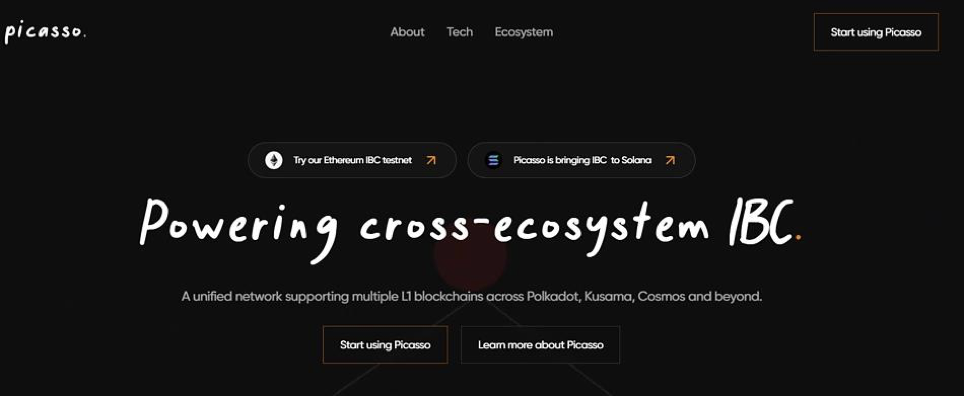
Restaking protocols are currently available only on the Ethereum blockchain as we write thanks to EigenLayer; however, Picasso hopes to implement a similar solution on the Solana network.
The project will adopt a similar approach to what Eigenlayer has done so far with liquid restaking. According to Picasso, LST tokens like Marinade
Staked Solana (mSOL) and jitoSOL will be accepted by the restaking contract in addition to native Solana tokens and LP tokens from decentralized exchanges on the network like ORCA. Stakers can commit their resources to the protocol via a portal provided by Trustless and receive additional yields beyond the specified rewards from the IBC interoperability protocol.
Advantages and Disadvantages
Restaking transforms staked resources into “flexible assets” that can be reused on different systems at will. This offers numerous advantages, such as:
- Capital utilization optimization: One of the main benefits of restaking is the ability to maximize the use of already invested capital. Investors can generate higher returns on their already locked assets without the need to commit additional financial resources. This advantage becomes particularly enticing in a market context where capital optimization is crucial to maximize profits.
- Network security reinforcement: Restaking contributes to improving network security. By reinvesting proceeds from staking into the platform, investors contribute to strengthening the robustness of the blockchain, making it more resistant to attacks and manipulations.
- Facilitated access for new projects: It offers an opportunity for new projects to more easily integrate into a shared security system, without having to start from scratch and face the challenges of building a secure and reliable network on their own.
Restaking also poses risks and disadvantages such as:
- Increased risk of penalties: Those participating in restaking are subject to a higher risk of penalties (so-called slashing), which could result in partial or total loss of invested capital if incorrect behaviors occur during the validation phase. In addition to the rules set by Ethereum, the specific conditions of the protocol being targeted for restaking must also be considered.
- Centralization risks: The allure of higher fees could lead many validators to concentrate restaking on a limited number of protocols, undermining the principle of decentralization and creating potential points of vulnerability.
- Possible congestion on Ethereum: Excessive diversion of validation resources from the main network to minor protocols could compromise the overall security and performance of Ethereum.
Conclusions
The goal of restaking is simple; more value for stakers and other protocols, including the restaking resource provider itself. Reactions to the reframing of the narrative have generally been positive, although reservations and criticisms have also been expressed. As restaking gains momentum, we are introduced to an era that further tests how blockchains and cryptocurrencies should be utilized.


 Market and Data
 _old_Become an author
 Wallet


