


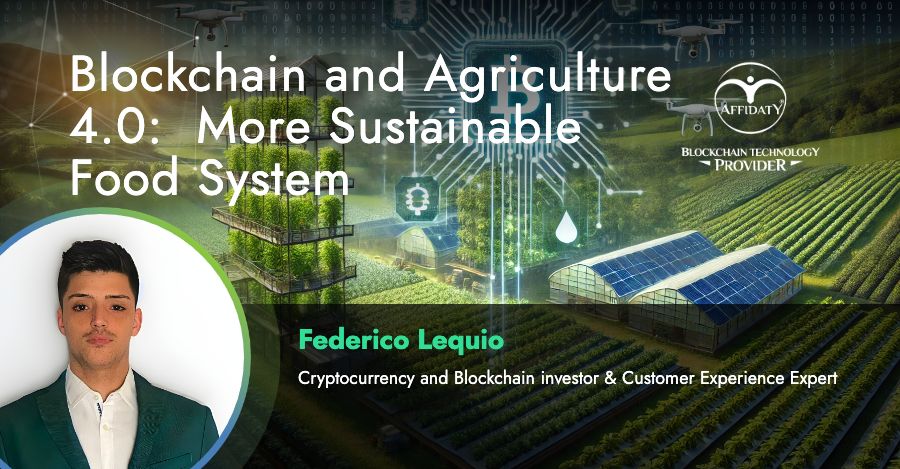
Intro
HUMAN EVOLUTION
I often question, I think a lot, but never enough. When I reflect on what human evolution means to me, I have to work hard to justify my answers. I don’t believe it’s just about inventing something new or simplifying a process. I think evolution must also encompass something more spiritual and ethical, something that sometimes goes beyond popular consensus.
Perhaps evolution means challenging ourselves, making something easy more difficult to protect the planet we live on.
Agriculture is undergoing a digital revolution, driven by the need to increase efficiency, improve sustainability, ensure food security, and enhance transparency across the entire supply chain.
Blockchain technology, with its unique capabilities, is set to play a crucial role in unlocking the full potential of Agriculture 4.0 and addressing some of its key limitations.
Let’s explore how agriculture and blockchain will come together to shape the world of TOMORROW, TODAY!
Understanding Agriculture 4.0: Let’s Begin!

Agriculture 4.0 represents a significant paradigm shift, characterized by the full integration of advanced technologies to optimize every stage of the agricultural process. It is more than just automation; it is about creating a data-driven, interconnected ecosystem that fosters resilience and sustainability.
Key Components:
- Vertical Farming: Growing crops in stacked layers, often indoors in climate-controlled environments, to maximize space use, reduce water consumption, and eliminate the need for pesticides. Modern vertical farms are experimenting with closed-loop systems that recycle water and nutrients, achieving near-zero waste.
- Hydroponics & Aeroponics: Growing plants without soil by using nutrient-rich water solutions to deliver essential elements directly to the roots. These methods allow precise control over growing conditions, resulting in faster growth cycles and higher yields. Aeroponics, a subset of hydroponics, suspends roots in the air and periodically sprays them with nutrient solutions, further increasing oxygenation and reducing water usage compared to traditional hydroponics.
- Precision Agriculture: Utilizing sensors, drones, GPS, and data analytics to monitor crop health, soil conditions, and environmental factors in real-time. This enables farmers to apply inputs (water, fertilizers, pesticides) only where and when necessary, minimizing waste and environmental impact.
These innovative approaches rely heavily on real-time data, seamless connectivity, and sophisticated automation, making them ideal candidates for strategic blockchain integration. However, they also introduce new complexities to the supply chain, which blockchain can help manage and resolve.
What is Blockchain Technology? The Basics

At its core, blockchain is a decentralized, distributed, and immutable ledger that securely records transactions across a network of multiple computers. Instead of relying on a central authority such as a bank or government, trust is established through cryptography and a peer-to-peer network. Each transaction is grouped into a “block,” which is then cryptographically linked to the previous block, forming a “chain.”
Although blockchain is often associated with cryptocurrencies, its potential applications extend far beyond finance. Its intrinsic ability to ensure transparency, enhance security, establish trust, and streamline complex processes makes it an extraordinarily powerful tool for transforming various industries, including agriculture.
How Blockchain Can Revolutionize Agriculture 4.0: Practical Applications
Blockchain technology can be strategically applied to Agriculture 4.0 in multiple ways, directly addressing key challenges and unlocking a wide range of new opportunities:
Key Benefits of Blockchain in Agriculture
- Traceability & Transparency: Records every step of the supply chain, from planting to the final consumer, ensuring visibility into product origins and quality. Consumers can access this information via a QR code, for example.
- Operational Efficiency: Streamlines supply chains by automating workflows and reducing intermediaries. Smart Contracts can automate tasks such as quality verification, payment releases upon predefined criteria, and inventory management.
- Food Safety: The immutable nature of blockchain ensures that all critical food safety and quality data remain secure, tamper-proof, and unalterable. When combined with IoT sensors, it enables real-time monitoring of food safety parameters.
- Environmental Sustainability: Blockchain promotes verifiable sustainable farming practices by providing data on the environmental impact of food choices. This fosters more sustainable methods and facilitates access to green funding.
- Farmer Empowerment: Blockchain gives farmers greater control over their valuable data, strengthens their bargaining power, and promotes fairer access to diverse markets. It can reduce transaction costs, increase price transparency, and ensure that farmers receive a larger and more predictable share of final profits.
Blockchain-based platforms can also facilitate access to microloans, crop insurance, and other financial services.
Advantages for Farmers ↔ Consumers ↔ Environment: Nothing is Missing!

The synergy between blockchain technology and Agriculture 4.0 unlocks a comprehensive set of compelling benefits across the entire food ecosystem:
- For Consumers: Greater trust through enhanced transparency, improved food safety, and access to ethically and sustainably produced goods aligned with their values.
- For Hardworking Farmers: Fairer and more stable prices for their products, significantly reduced transaction costs, streamlined access to broader markets, and increased funding opportunities.
- For the Environment: Stronger promotion of environmentally friendly sustainable practices, tangible waste reduction, and far more efficient and responsible use of precious natural resources.
Illustrative Examples: Blockchain in Action!
- Walmart’s Traceability Initiative: Walmart successfully implemented a blockchain-based system to track the origin and journey of mangoes, significantly reducing the time needed to trace a foodborne disease outbreak from weeks to mere seconds.
- Carrefour’s Food Blockchain: Carrefour, a global retail leader, uses blockchain to provide consumers with detailed information on the origin, production methods, and transportation of its various food products, enhancing transparency.
- AgriLedger: This platform leverages blockchain to create a secure and transparent supply chain for small farmers in developing countries, helping them access fair prices and connect with global markets.
Overcoming Challenges, Embracing Opportunities
While the potential benefits of blockchain in Agriculture 4.0 are undeniably compelling, it is essential to acknowledge and address existing challenges:
- Scalability Limitations: If not perfectly implemented, blockchain networks can sometimes be slow and relatively costly, especially for large-scale agricultural supply chains.
- Interoperability Issues: Different blockchain platforms may not be compatible with one another, leading to fragmented data silos that hinder seamless information sharing.
- Technical Expertise Gaps: Successful implementation and ongoing management of blockchain solutions require specialized skills, which may be scarce in certain agricultural communities.
- High Initial Investment Costs: The initial investment in blockchain technology and infrastructure can be significant, posing a barrier to entry, particularly for small farmers and resource-limited organizations.
Despite these challenges, the long-term opportunities presented by blockchain in Agriculture 4.0 are vast. As the technology continues to mature, become more intuitive, and gain wider adoption, it has the potential to transform the food system in profound ways.
The Future of Agriculture: A Blockchain-Based Smart Ecosystem
As we look ahead, the deeper integration of blockchain with other cutting-edge technologies—such as the Internet of Things (IoT), advanced Artificial Intelligence (AI), Machine Learning algorithms, and Big Data analytics—will usher in a new era of innovation and efficiency in agriculture.
By proactively embracing innovation, fostering open collaboration, and ensuring responsible implementation, we can unlock blockchain’s full transformative potential to build a more sustainable, resilient, and equitable food system for all of humanity.






 Market and Data
 _old_Become an author
 Wallet


